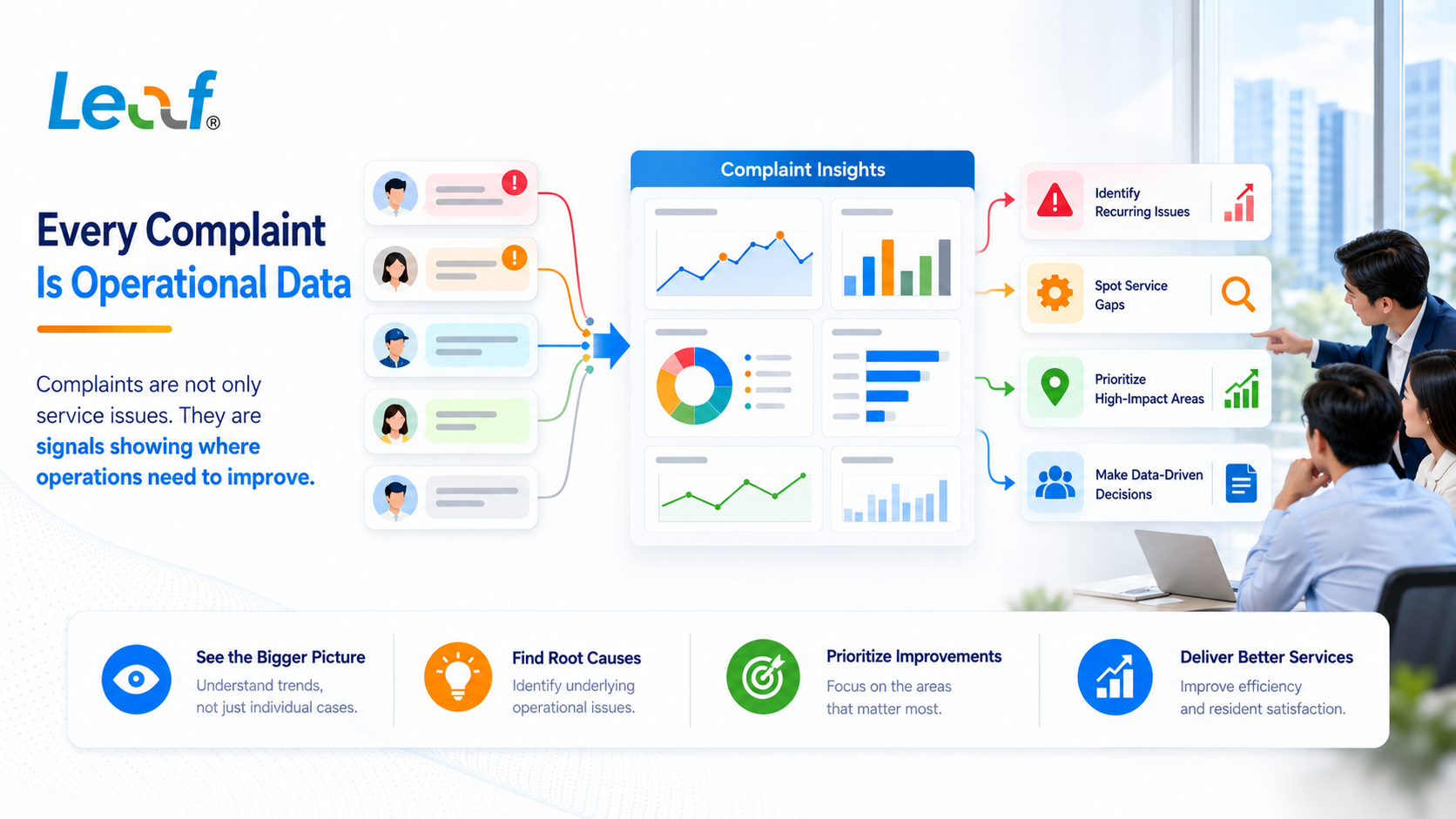
Every Complaint Is Operational Data
Complaints are not only service issues.
They are signals showing where property operations may need to improve.
A single complaint may describe one resident’s experience. But when similar complaints appear repeatedly, they may reveal wider problems affecting facilities, services, communication or daily operations.
This is why complaint analysis matters.
It helps property management teams move beyond handling individual cases and understand the operational patterns behind them.
A Complaint Is More Than a Single Service Issue
Property teams receive complaints about maintenance, cleanliness, security, communication and other daily services.
Each complaint deserves an appropriate response. However, resolving one case does not always mean the underlying problem has been solved.
For example, a resident may report a facility issue. The team responds and closes the case. But if similar complaints continue to appear, the problem may require more than another repair.
The question is no longer simply whether the complaint was resolved.
It is whether the same problem keeps returning.
For more information, read our Resident Complaints Follow-Up article.
Why Complaints Are Operational Data
Resident complaints provide useful insights into how a property is performing.
They can help management identify:
Recurring maintenance or facility issues
Service gaps affecting resident satisfaction
Delays in communication or follow-up
Areas requiring closer management attention
Opportunities to improve daily operations
Not every complaint indicates a major problem. Some are isolated incidents, while others reflect temporary conditions or different expectations.
The real value comes from reviewing complaints together over time.
When similar concerns appear repeatedly, management teams can begin to recognise patterns that individual cases may not reveal.
Repeated Complaints Can Reveal Deeper Problems
Repeated complaints may indicate an underlying operational issue.
For example:
Frequent lift complaints may suggest recurring equipment problems.
Repeated maintenance follow-ups may indicate delays or unclear responsibilities.
Ongoing cleanliness concerns may reveal inconsistent service delivery.
Similar communication complaints may suggest residents are not receiving sufficient updates.
These patterns help management understand where improvements may be needed.
Instead of treating every complaint as a separate event, property teams can review whether the same problem is affecting multiple residents or continuing over time.
The goal is not only to close complaints, but to understand why they keep happening.
Complaint Analysis Helps Identify Service Gaps
A service gap occurs when the expected experience does not match the actual experience.
Residents may experience this when:
Issues take too long to resolve
Updates are unclear or inconsistent
The same problem keeps returning
Facilities are not maintained consistently
Requests appear to be overlooked
These concerns may not always be obvious in general performance reports.
Residents often experience them first.
Through complaint analysis, management teams can recognise changes in resident feedback, identify recurring concerns and review whether existing services are meeting expectations.
This helps turn individual complaints into meaningful operational data insights.
Looking Beyond Individual Complaints
A complaint rarely exists completely on its own.
Management may need to consider the wider operational situation, including maintenance activities, vendor responses, facility conditions or communication between teams.
For example, repeated complaints about a shared facility may be connected to recurring maintenance work or delayed service responses.
Understanding these connections can help management see the bigger picture.
When complaint information is considered alongside other operational information, teams can make better-informed decisions rather than relying only on individual cases.
From Complaint Analysis to Better Management Decisions
The value of complaint analysis becomes clearer when it supports practical decisions.
Management teams can use complaint insights to consider whether they should:
Prioritise a recurring facility problem
Review service quality or response delays
Allocate additional resources
Improve communication with residents
Discuss operational concerns with the relevant teams
Consider preventive improvements
Not every complaint requires the same level of attention.
Some issues can be resolved quickly, while others may affect more residents, continue for longer periods or create wider operational concerns.
A clearer understanding of complaint patterns helps JMBs, MCs and property managers focus on the areas that matter most.
To learn how operational visibility supports management decisions, read our Property Operations Dashboard article.
4 Questions Management Teams Should Ask
When reviewing resident complaints, management teams should consider four important questions.
1. Is this an isolated issue or a recurring pattern?
Repeated complaints may indicate a problem that requires more attention.
2. Who else may be affected?
An issue reported by one resident may also affect others within the community.
3. Has the underlying problem been addressed?
Responding to a complaint is not always the same as resolving its root cause.
4. What can be improved?
Every recurring issue provides an opportunity to review services, communication or operational processes.
These questions help management move from reactive complaint handling toward continuous improvement.
Better Complaint Management, Better Resident Experience
Residents may not expect every issue to be resolved immediately.
However, they expect their concerns to be acknowledged, understood and handled appropriately.
When management teams identify recurring problems earlier, they can improve communication, prioritise important service issues and reduce repeated frustration.
Effective property complaint management is therefore not simply about reducing the number of complaints.
It is about improving the services and operational conditions that cause complaints in the first place.
Final Thought
Complaints are more than records of dissatisfaction.
They are valuable signals showing where property operations may need attention.
A single complaint tells management what one resident experienced.
Repeated complaints can reveal a wider operational pattern.
By recognising trends, identifying service gaps and prioritising improvements, management teams can turn resident feedback into more informed decisions.
Complaints are not only service issues. They are signals showing where operations need to improve.
Thinking About Better Complaint Management?
LEAF helps property teams improve operational visibility and make better-informed decisions across daily property management work.
If your team spends too much time responding to repeated complaints without seeing the wider pattern, a clearer operational view can help turn resident feedback into practical improvement opportunities.
Explore the LEAF AI Solution to learn how digital solutions can support clearer property operations and better management decisions.
Related posts
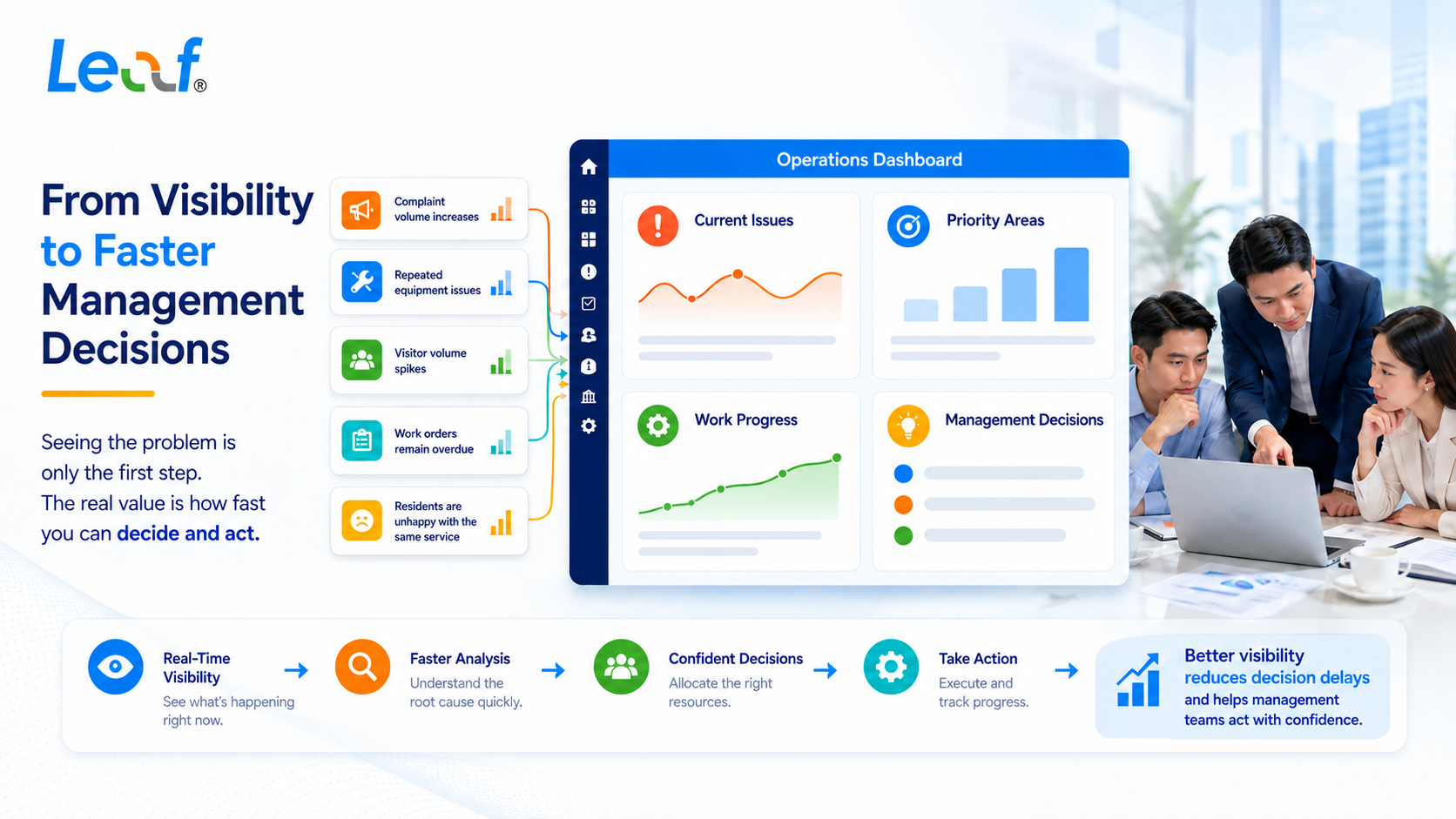
Property Operations Dashboard: From Visibility to Faster Management Decisions