From Resident Communication to Better Operational Visibility
Property management teams receive a large amount of information every day.
Residents share concerns. Service providers provide updates. Building staff communicate about daily operations, while management teams review information about facilities, services and community matters.
Communication is essential to property management.
However, more communication does not always mean better management.
The real challenge is understanding which information matters, recognising important concerns and maintaining a clearer view of daily operations.
This is why effective property management communication is important.
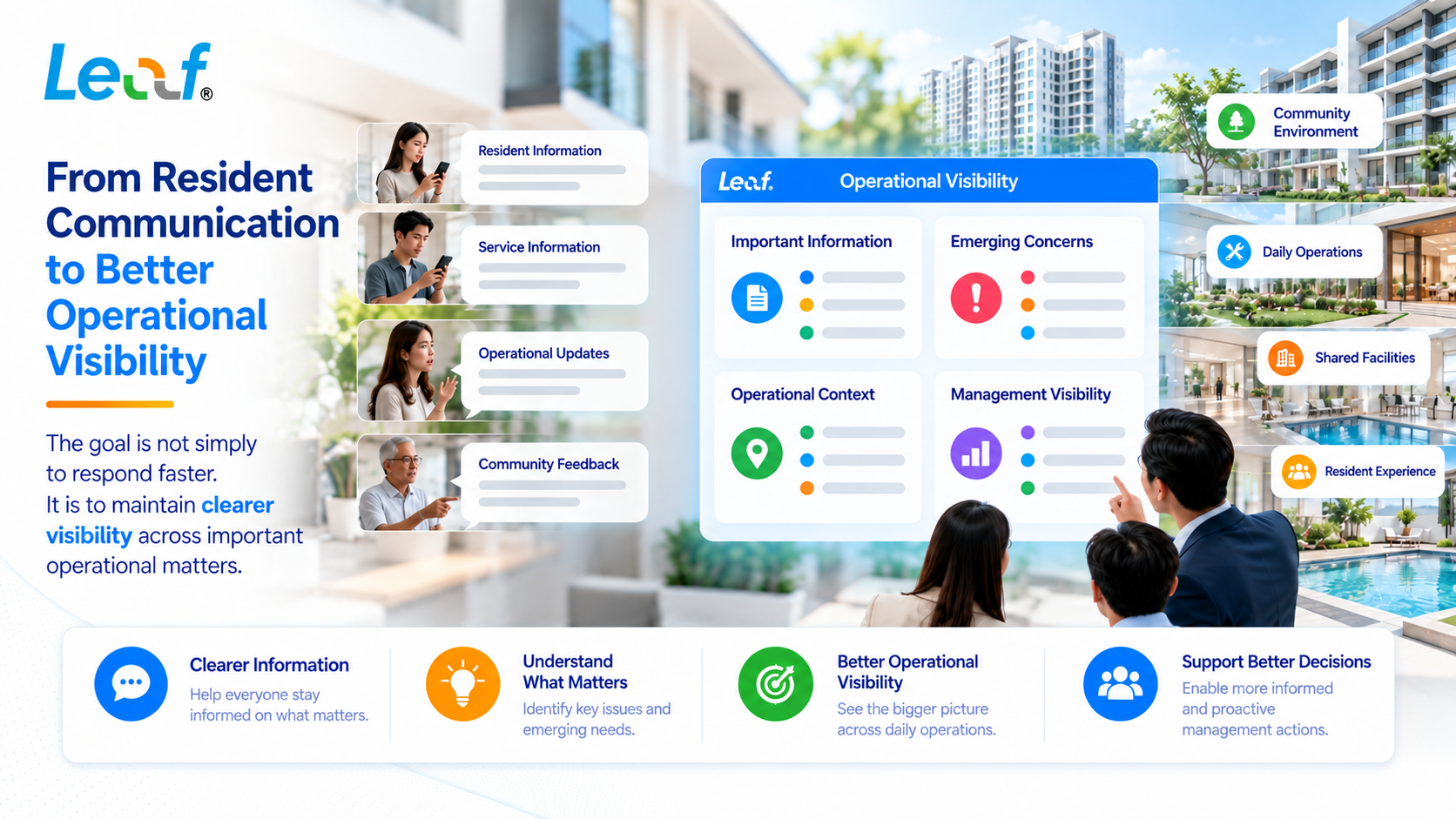
The goal is not simply to respond faster. It is to maintain clearer visibility across important operational matters.
For more information about resident updates, read our Resident Communication Updates article.
Communication Is More Than Sending and Receiving Information
Daily property management involves communication between residents, property managers, building staff, vendors, service providers and committee members.
Each group provides information from a different perspective.
Residents describe their experiences. Service providers share updates about ongoing work. Building staff report daily observations, while management teams consider how these matters affect the wider community.
All this information can be useful.
However, communication only creates meaningful value when important information is clearly understood.
Without proper visibility, significant concerns may become mixed with routine messages, making it difficult for management teams to identify what requires attention.
Good communication is not just about sharing information. It is about creating better understanding.
More Information Does Not Always Mean Better Visibility
It is easy to assume that more messages, reports and updates will improve property management operations.
In reality, excessive information can sometimes create confusion.
Management teams may spend valuable time:
- Reviewing repeated updates
- Searching for the latest information
- Comparing different explanations
- Identifying which concerns are most important
- Following up on matters without sufficient context
The problem is not necessarily a lack of communication.
The problem is that important information may be difficult to recognise within daily operational activity.
Better operational visibility helps management teams understand what matters instead of treating every update as equally important.
Important Information Needs Operational Context
Not every message requires the same level of attention.
Some updates are routine, while others may indicate a developing concern, recurring issue or service gap.
For example, one resident reporting a facility concern may appear to be an isolated matter.
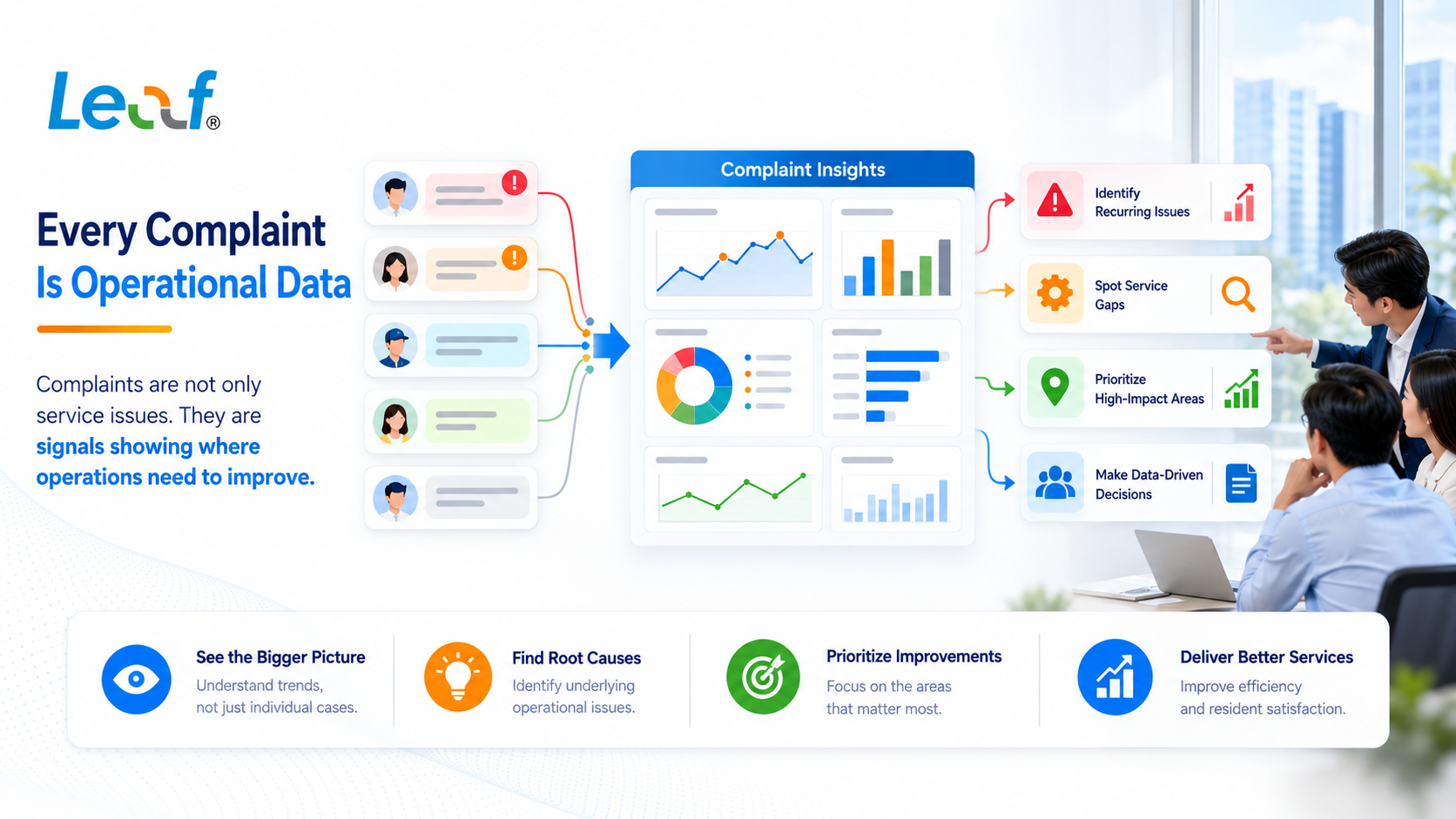
However, when similar concerns continue to appear, management may need to consider whether the issue reflects a wider operational problem.
A clearer understanding requires looking beyond individual messages.
Management teams should consider:
- Whether similar concerns have appeared before
- Whether multiple residents or facilities are affected
- Whether the situation is improving or becoming more serious
- Whether additional management attention is required
- Whether the concern affects overall service quality
This wider context supports more informed discussions and reduces reliance on isolated updates.
From Communication to Operational Visibility
Operational visibility means having a clearer understanding of what is happening across the property.
It helps management teams see beyond individual messages and recognise the wider operational situation.
Effective community management communication should support a clearer view of:
- Current concerns and emerging issues
- Areas requiring management attention
- Repeated service-related problems
- Changes affecting resident experience
- Matters that may influence operational priorities
The purpose is not to create more reporting work.
It is to make important information easier to understand and maintain continuity when different people or teams are involved.
Clearer information also helps reduce confusion when responsibilities change or when management needs to review an ongoing matter.
To understand how visibility affects daily operations, read our Property Operations Visibility article.
Better Visibility Supports Better Management Decisions
When information is clearer, management discussions become more focused.
Instead of simply asking what information has been received, property managers can consider:
- What is the main concern?
- Is this a new or recurring issue?
- Who or what may be affected?
- How important is the matter?
- What requires closer attention?
- What should management consider next?
These questions help move communication beyond information sharing.
They support better understanding, clearer priorities and more informed management decisions.
A shared operational view can also improve discussions between property managers, JMBs, MCs, service providers and internal teams.
For more information about management decisions, read our Property Operations Dashboard article.
4 Questions Property Management Teams Should Ask
When reviewing important communication, management teams can use four practical questions.
What Is the Main Issue?
Identify the actual concern rather than becoming distracted by repeated messages or unnecessary information.
- Is This New or Recurring?
Repeated concerns may indicate a wider service or operational issue that requires further attention.
Who or What May Be Affected?
Understanding the potential impact helps management consider the issue from a broader community perspective.
What Needs to Be Understood Next?
Determine whether additional information, clarification or context is required before deciding how to respond.
These questions help improve the quality of management discussions without making communication more complicated.
Clearer Communication Supports Better Resident Experience
Residents do not only care about receiving a response.
They also want to know that their concerns are understood and taken seriously.
Clearer resident communication can help property teams:
- Understand concerns more accurately
- Provide more relevant updates
- Recognise repeated issues earlier
- Maintain more consistent communication
- Identify potential service gaps
- Support better operational decisions
This can strengthen confidence in the management process.
Clear communication does not guarantee that every issue will be resolved immediately.
However, it helps residents understand that their concerns have been recognised and are receiving appropriate attention.
Better communication also supports the wider community by helping management consider how resident concerns, shared facilities and daily services affect one another.
This is an important part of Smart Community Management, where clearer information supports better coordination and service planning.
The Goal Is Not Simply to Respond Faster
Faster responses can improve convenience, but speed alone does not guarantee better management.
A quick response may still lack context.
A large number of updates may still leave management uncertain about what matters most.
The real value of property management communication comes from helping teams understand important concerns, recognise changes and maintain a clearer operational picture.
When communication supports understanding, management teams can make more informed decisions and focus attention where it is needed.
Better communication is not about having more messages. It is about having greater clarity.
Final Thought
Property management teams receive information from residents, staff, service providers and the wider community every day.
The challenge is not simply receiving more information.
It is understanding which information matters, how different concerns may be connected and what the wider operational situation looks like.
Clearer communication supports better understanding.
Better understanding supports stronger operational visibility.
And stronger operational visibility helps management teams make more informed decisions.
The goal is not simply to respond faster. It is to maintain clearer visibility across important operational matters.
Thinking About Better Operational Visibility?
LEAF helps property teams improve operational visibility and make better-informed decisions across daily property management work.
If your team spends too much time reviewing separate updates or trying to understand what requires attention, clearer operational visibility can help create a more complete view of daily property matters.
Explore the LEAF Property Management Solution to learn more about improving communication, visibility and daily property operations.
Related posts