Complaint Follow-Up: 5 Ways to Improve Response
Complaint follow-up is one of the most important parts of property management operations. In every residential community, complaints are part of daily work.
Lift breakdowns, parking disputes, leaking pipes, access card issues and facility defects will happen. What residents remember most is not always the issue itself, but how the management team responds afterward.
When follow-up is unclear, delayed or inconsistent, frustration grows quickly.
Strong complaint follow-up helps property teams give clearer updates, reduce repeated coordination and maintain better trust with residents.
1. Make Every Complaint Visible
The first step to better complaint follow-up is visibility.
Many property teams already work hard to resolve resident complaints. However, without a structured workflow, important updates can easily become scattered across WhatsApp chats, phone calls, spreadsheets, emails or handwritten notes.
As more complaints come in, it becomes harder to see what has been reported, what has been assigned and what still needs action.
This often leads to:
Missed updates
Duplicate complaints
Confusion over task ownership
Delayed responses
Residents repeatedly asking for status updates
When complaint information is not visible, follow-up becomes dependent on memory, manual checking and internal reminders.
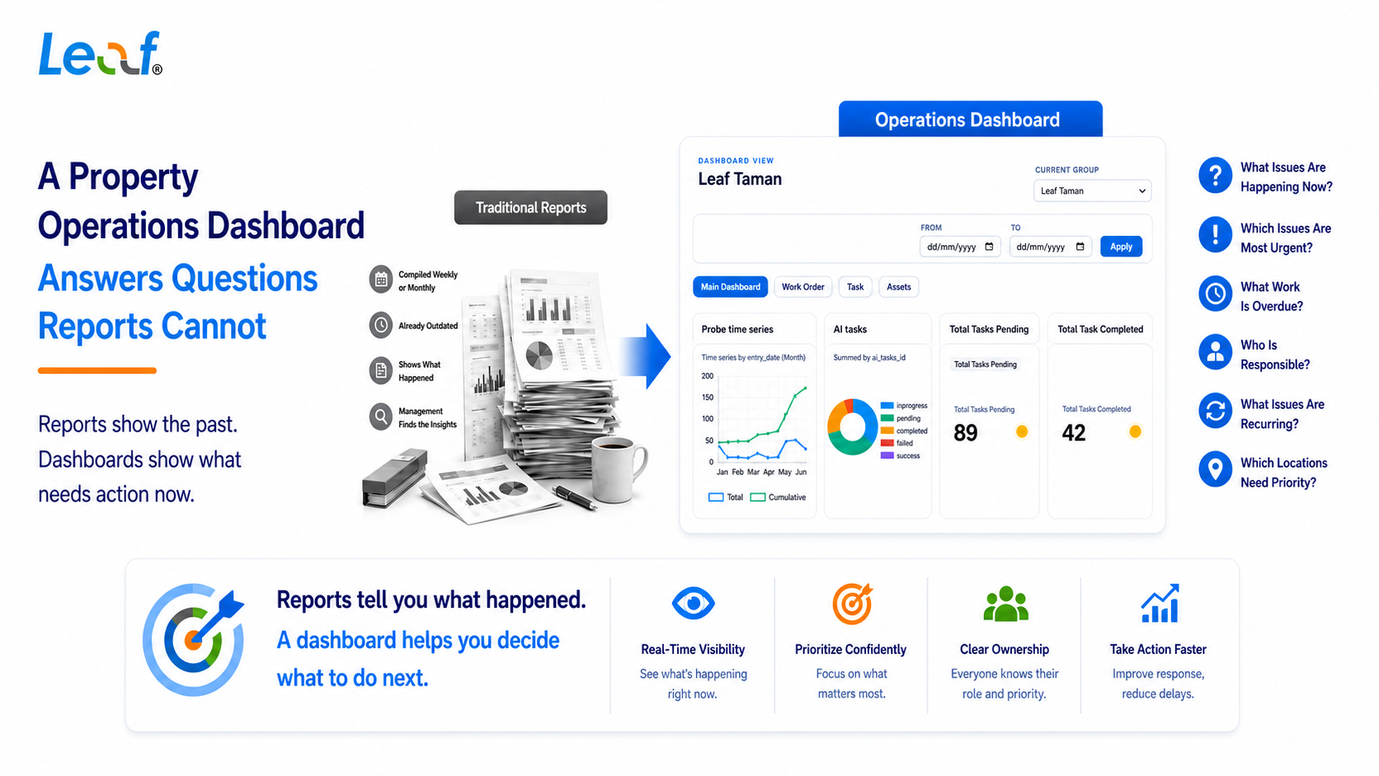
To see why visibility matters in daily issue handling, read our article on property operations visibility.
2. Assign a Clear Task Owner
A complaint should not remain as just a message.
Once a complaint is received, the team should know who is responsible for the next action. This may include checking the issue, contacting maintenance, arranging a vendor, updating the resident or escalating the matter to management.
When no clear owner is assigned, follow-up becomes inconsistent.
For example, one staff member may acknowledge the complaint, another may contact the technician, and someone else may be expected to update the resident. If ownership is not clear, each person may assume another person is handling the next step.
A proper complaint management workflow should make task ownership visible.
The team should be able to see:
Who is responsible
What action is required
What status the complaint is in
Whether the resident has been updated
What follow-up is still pending
Clear ownership improves accountability and reduces unnecessary coordination.
3. Keep Residents Updated Before They Ask Again
Residents do not expect every issue to be solved immediately.
But they do expect to know whether the issue has been acknowledged, assigned and followed up.
Silence creates frustration. When residents cannot see progress, they may assume nothing is happening. This leads to repeated calls, more WhatsApp messages and unnecessary escalation.
Simple updates can make a big difference.
For example:
“The task has been assigned.”
“Maintenance is scheduled tomorrow.”
“We are checking with the vendor.”
“Replacement parts are being arranged.”
“The issue has been completed.”
These updates help residents feel informed and reassured, even before the issue is fully resolved.
Good complaint follow-up creates confidence because residents can see that the management team is actively handling the matter.
4. Track Status, Timeline and Pending Action
A strong follow-up process should show more than the complaint message.
Property teams need to track the full progress of each issue. This includes when the complaint was received, who was assigned, what action was taken, when updates were sent and what is still pending.
Without a clear timeline, management may only notice a delay after residents start asking again.
For example, a leaking pipe may be reported today, assigned tomorrow and still waiting for vendor confirmation two days later. If this is not visible, the case can easily become a repeated complaint.
A structured complaint tracking system helps teams monitor:
Current status
Assigned person
Maintenance progress
Vendor response
Resident update history
Pending approval
Completion record
This helps management teams respond faster and reduce the risk of missing important follow-up.
5. Use Workflow Visibility to Improve Accountability
Complaint follow-up is not only about communication. It is also about accountability.
When every issue is visible, assigned and tracked properly, management teams can coordinate more consistently. Staff know what needs to be done. Managers can review progress. Residents receive clearer updates.
A proper property management workflow helps teams move from reactive complaint handling to more organised daily operations.
Instead of repeatedly asking, “Has anyone followed up?”, the team can see the answer from a shared system.
This improves response quality, reduces repeated coordination and gives management better control over daily issue handling.
Smarter Complaint Management Starts with LEAF
LEAF Smart Community helps property management teams improve complaint tracking, maintenance workflows and resident communication with smarter digital operational tools.
Instead of leaving complaint follow-up scattered across messages, calls and manual records, LEAF helps teams centralise complaint information in one platform.
With LEAF, property teams can track complaint details, assign task owners, monitor maintenance progress, update residents and review pending actions more clearly.
This gives management teams better visibility over what has been reported, who is handling it and what still needs to be done.
If you want a more structured way to manage follow-up, explore our AI Solutions page.
Improve Complaint Follow-Up Before Trust Is Lost
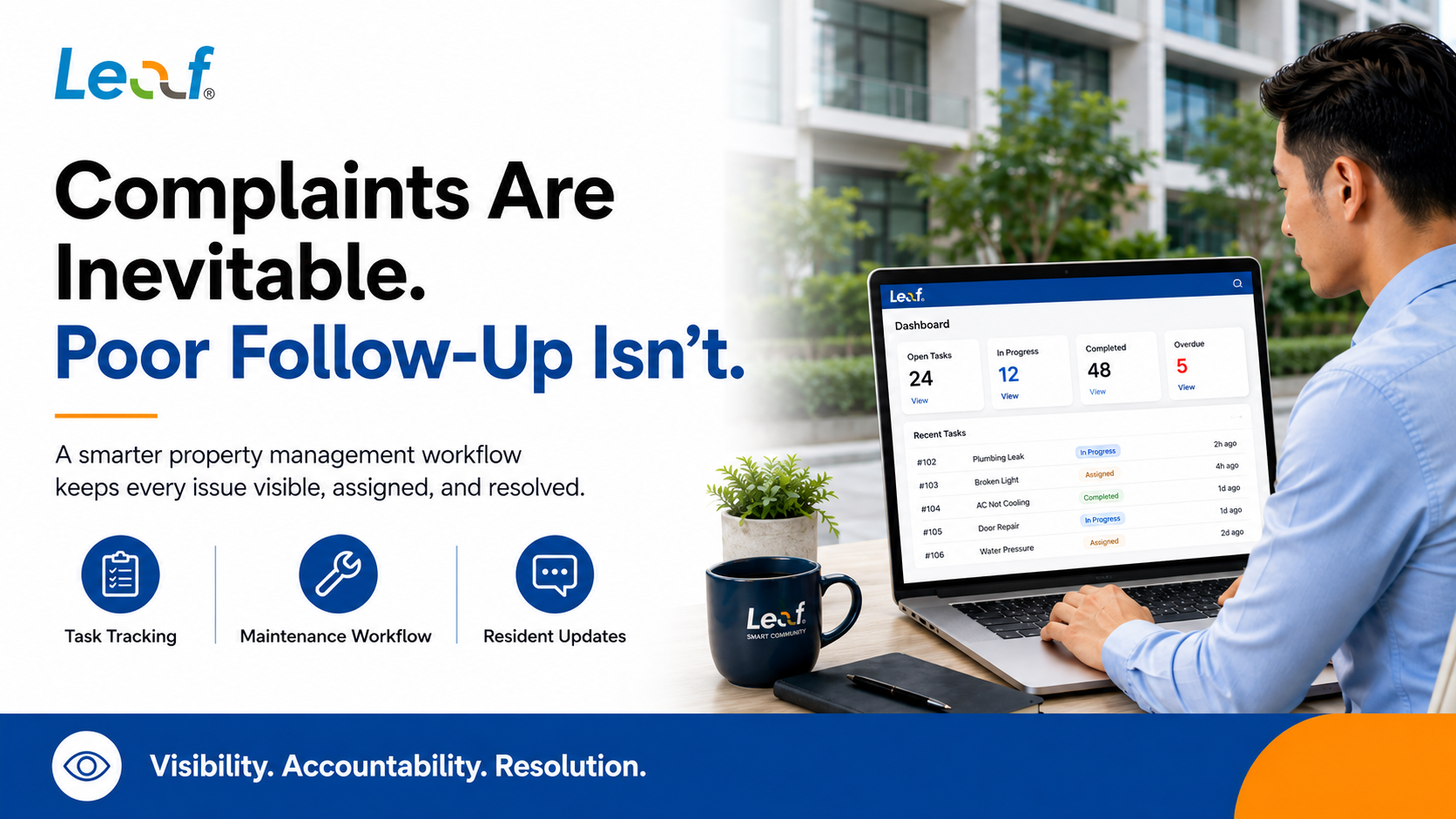
Complaints are inevitable. Poor follow-up is not.
Strong property operations are not only about solving problems quickly. They are also about making residents feel heard, informed and confident that issues are being managed properly.
With clearer complaint follow-up, property teams can reduce repeated enquiries, improve maintenance coordination and build stronger resident trust.
Contact LEAF today to discover how better workflow visibility can improve your property operations.
Related posts
Property Operations Dashboard: From Visibility to Faster Management Decisions