Property operations visibility is one of the most important factors in reducing delays across daily property management work.
In many buildings and communities, delays are often blamed on staff shortages, heavy workloads or slow vendor response. These issues may exist, but in many cases, the deeper problem is simpler:
People cannot act on information they cannot see.
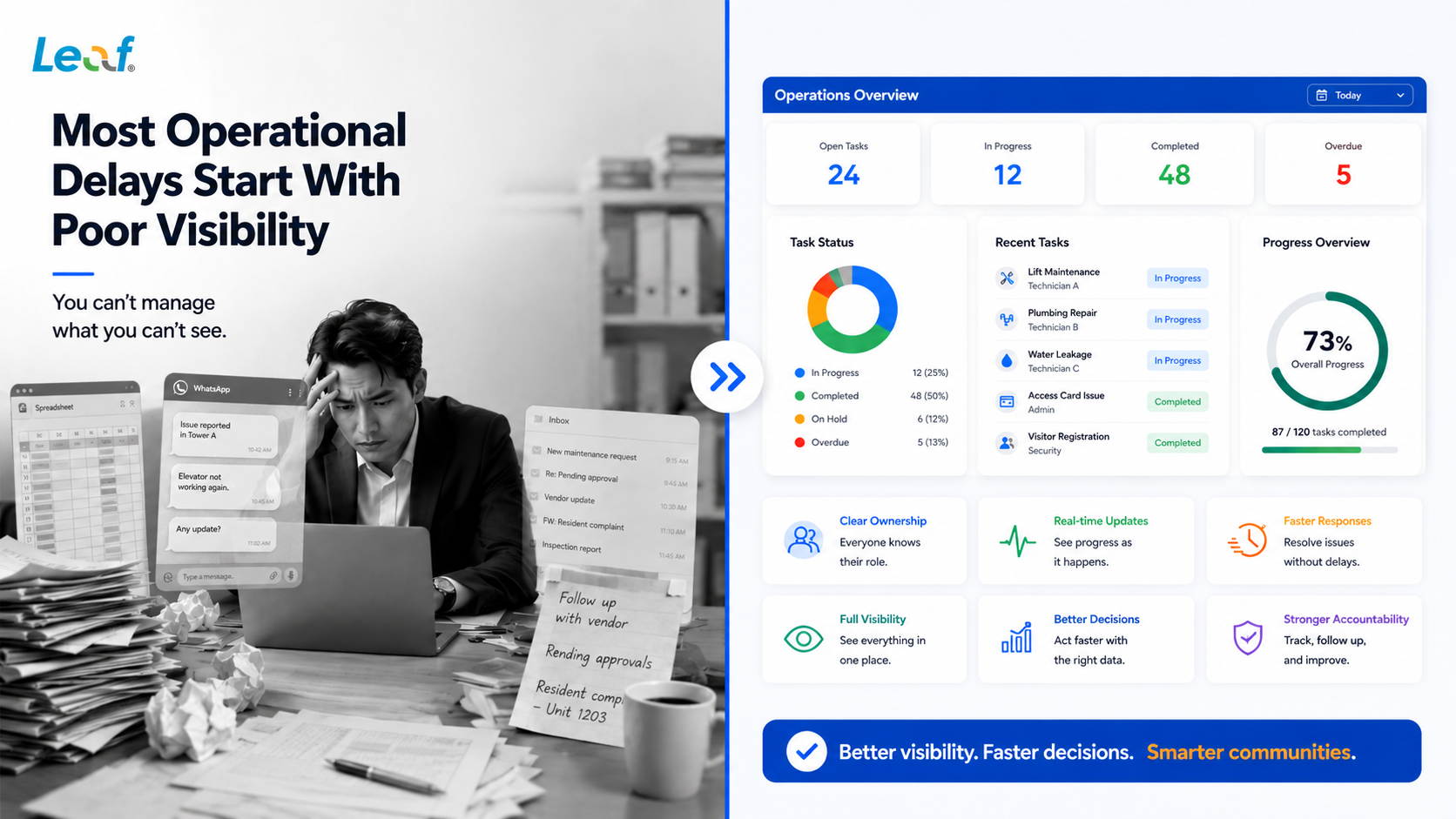
When maintenance requests, resident complaints, approvals and follow-up updates are scattered across WhatsApp chats, spreadsheets, emails and paper records, work becomes harder to manage. Teams spend more time searching for information, checking with each other and confirming the latest status instead of solving the actual problem.
A modern property management system helps teams centralise information, track requests clearly and improve visibility across daily operations.
Reduce Information Gaps Across WhatsApp, Email and Paper Records
Many property teams rely on multiple channels to manage daily work.
A resident complaint may come through WhatsApp. A maintenance request may be written on paper. An approval may be discussed by email. A follow-up note may be updated in a spreadsheet.
Each channel may be useful on its own, but when they are not connected, information gaps start to appear.
For example, one staff member may know that a technician has been contacted, while another staff member may only see that the complaint is still pending. A manager may receive an email approval, but the person handling the task may not know that the approval has already been given.
This creates delays, repeated checking and unnecessary confusion.
Better property operations visibility means important updates are not trapped inside separate communication channels. The team can see the latest status from one shared source.
Make Every Task Owner Clear
One common reason property management tasks are delayed is unclear ownership.
When a resident complaint or maintenance request is received, the team needs to know who is responsible for the next step. Without a clear task owner, the issue may be passed around, forgotten or handled too late.
A property management system should help teams see:
- Who is assigned to the task
- What action is required
- Whether the task is pending, in progress or completed
- Who needs to approve or follow up next
Clear task ownership reduces the need for repeated internal messages such as “Who is handling this?” or “Has anyone followed up?”
When everyone can see the task owner, accountability becomes easier to manage.
Track Status and Timeline More Clearly
Delays often happen when teams cannot see how long an issue has been pending.
For example, a leaking pipe may be reported in the morning, assigned in the afternoon, and still waiting for vendor confirmation the next day. If there is no clear timeline, management may only notice the delay when the resident asks for an update again.
With better visibility, teams can track the full timeline of each issue.
This includes when the request was received, when it was assigned, when the vendor was contacted, when updates were sent and whether any action is still pending.
A clear status and timeline help managers identify delays earlier, before they become complaints about poor follow-up.
Improve Resident Complaint and Maintenance Follow-Up
Resident complaints and maintenance requests usually require more than one action.
A simple issue may still involve receiving the complaint, confirming the location, assigning the task, contacting a technician, updating the resident and closing the case.
If any step is missed, the resident may feel ignored even if the team is already working on the issue.
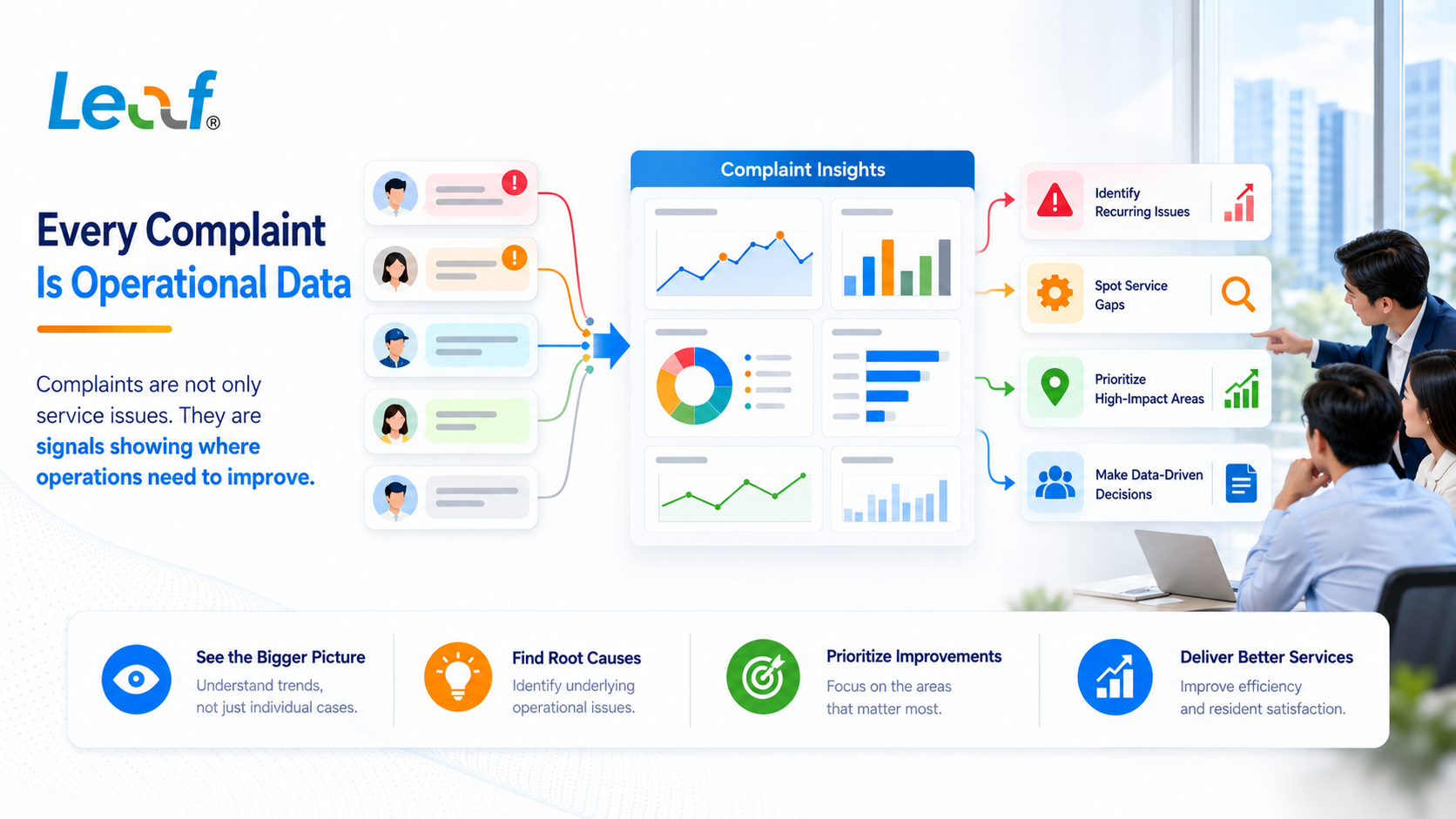
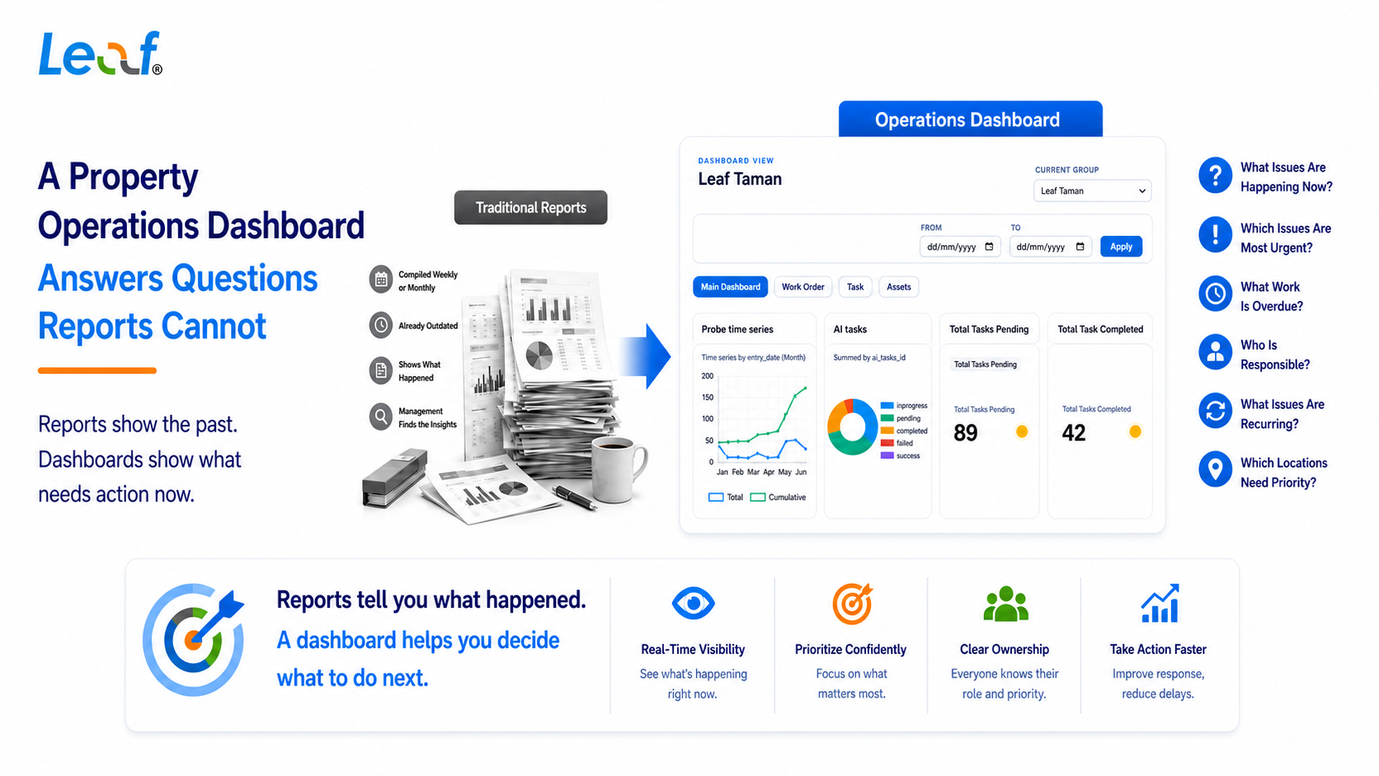
A property operations dashboard helps management teams track pending actions more clearly. They can see which complaints are still open, which maintenance requests are waiting for vendor response and which cases need resident updates.
This improves follow-up consistency and reduces repeated complaints caused by unclear communication.
Help Management Make Faster Operational Decisions
Poor visibility slows decisions.
When information is scattered, managers need to ask for updates before they can act. They may need to check WhatsApp messages, look through spreadsheets, search emails or ask staff for the latest status.
This slows down approvals, task escalation and resource planning.
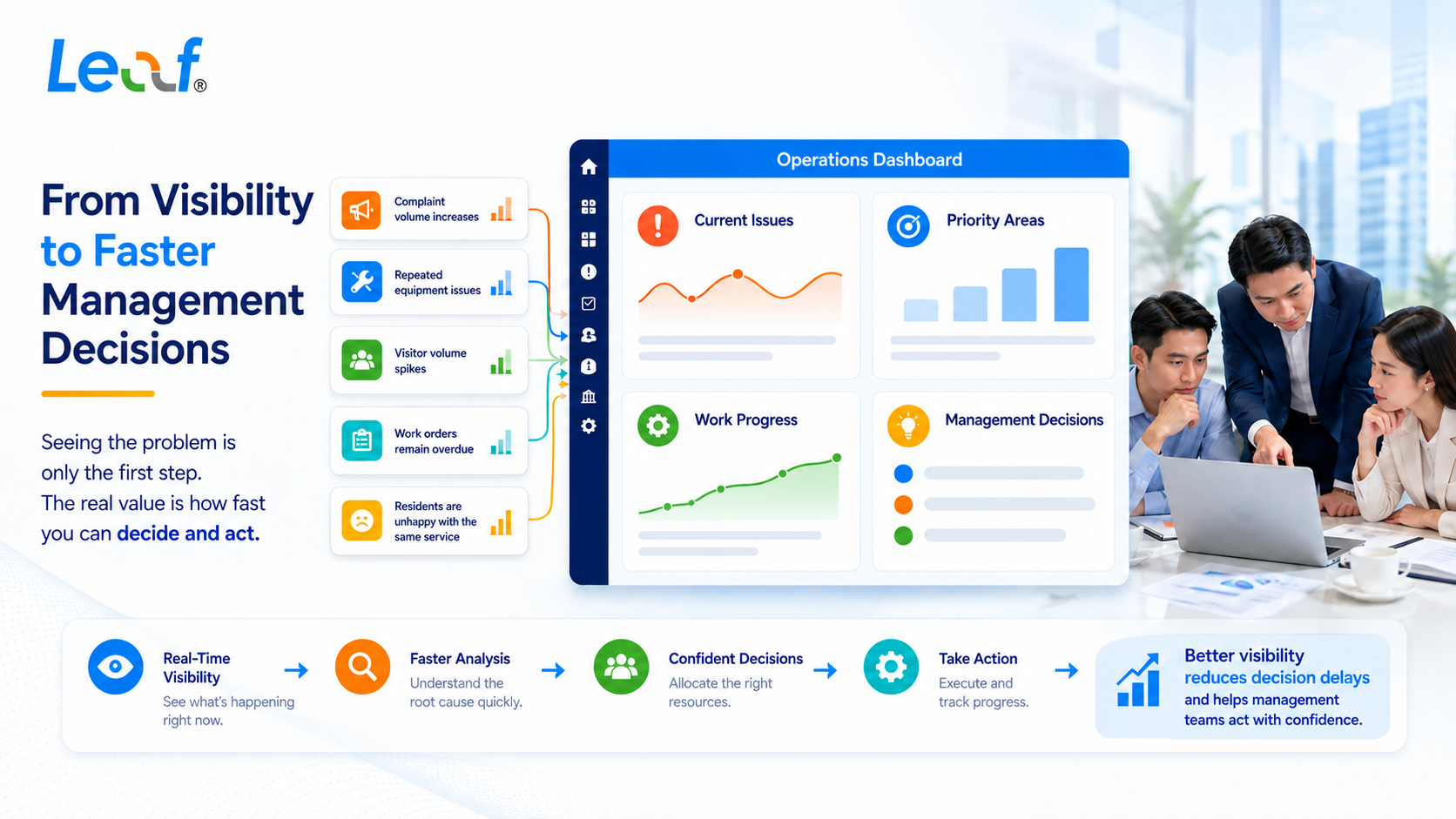
A centralised property operations dashboard gives management a clearer view of daily work. It helps teams monitor workloads, identify overdue tasks, check pending approvals and spot operational bottlenecks earlier.
Instead of reacting only after delays become serious, management can make faster decisions based on clearer information.
How LEAF Helps Centralise Property Operations
LEAF Smart Community helps property and community management teams centralise daily operational updates and track work more clearly.
By bringing task tracking, maintenance workflows, resident updates and operational dashboards into one platform, LEAF helps teams reduce scattered communication and improve visibility across daily operations.
With clearer task owners, status tracking, timelines and pending actions, management teams can follow up more consistently and make faster operational decisions.
Better visibility does not only help teams work faster. It helps communities operate with greater accountability, clearer communication and stronger resident confidence.
Improve Property Operations Visibility with LEAF
Most operational delays do not start because teams are not working.
They often start because the right information is not visible at the right time.
With LEAF, property management teams can centralise updates, track operations and move daily work forward with better visibility.
Contact LEAF today to discover how better property operations visibility can help your community operate faster and smarter.

Pingback: WhatsApp Complaint Management: 5 Problems to Fix