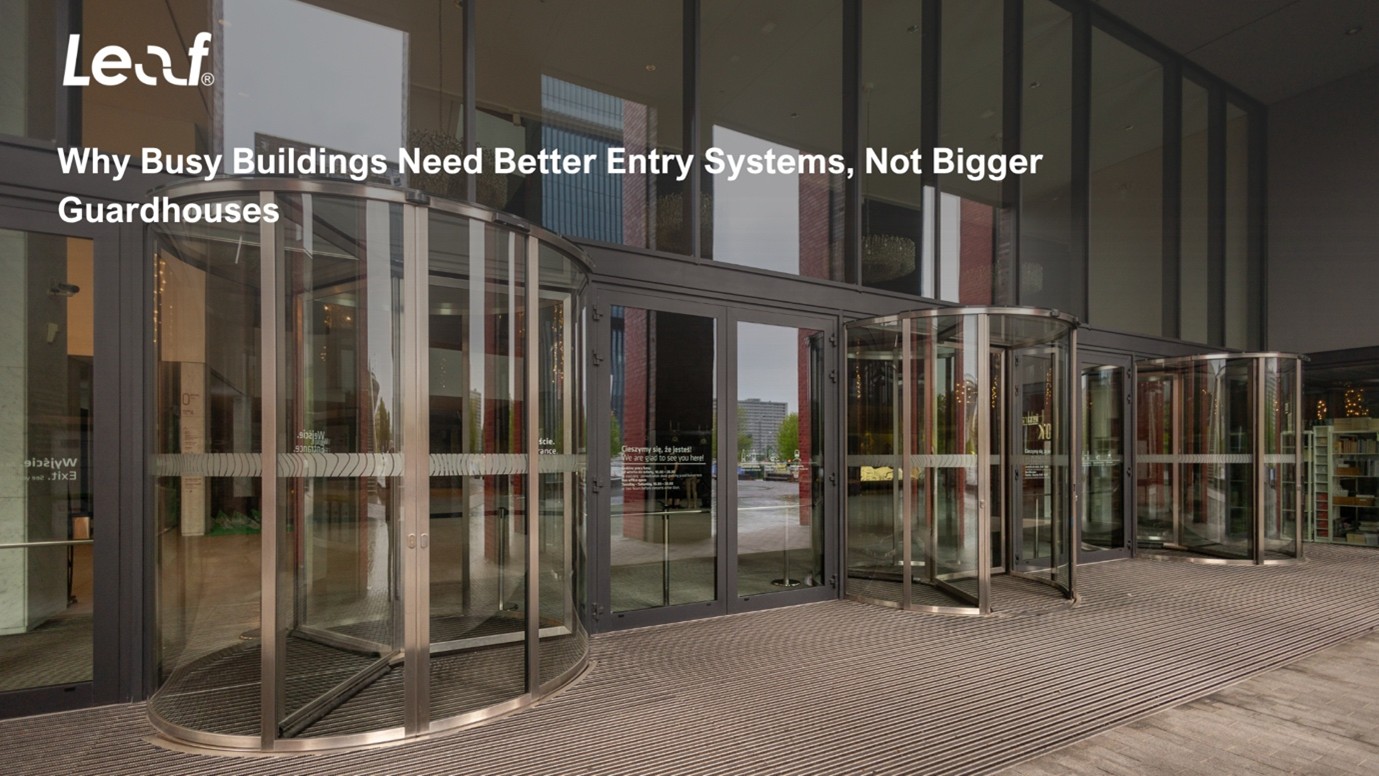
Building Entry Systems: Why Bigger Guardhouses Fail
Building entry systems play an important role in how efficiently busy properties manage visitor traffic, deliveries, contractors and daily access approvals.
When buildings get busier, the common reaction is simple: expand the guardhouse, add more lanes or hire more guards.
It feels like the logical solution.
But in many buildings, larger guardhouses do not fully solve the problem. Even after adding space or manpower, the same issues remain: congestion, delays, repeated approval calls, overloaded guards and frustrated visitors.
That is because the real issue is not always space.
It is the entry system.
More Traffic Does Not Always Mean You Need More Space
Modern buildings are experiencing a different kind of traffic than before.
It is no longer only residents, tenants or office staff entering the property. Today, a building entrance may need to handle:
Residents’ guests
Office visitors
Delivery riders and couriers
Contractors and vendors
Service providers
Ride-hailing drivers
Maintenance workers
This traffic does not only happen during morning or evening peak hours. Deliveries, contractor visits and service appointments can happen throughout the day.
As traffic increases, the entrance becomes a pressure point.
Expanding the guardhouse may create more physical room, but it does not automatically make the process faster. If the same manual workflow remains, the same bottlenecks will continue.
Manual Processes Are the Real Bottleneck
In many buildings, entry still depends on manual steps.
Visitors need to write in logbooks. Guards need to check details. Tenants or residents may need to receive approval calls. Entry records may still be written manually or checked later from paper files.
These steps take time no matter how large the guardhouse is.
The result is often:
Long queues during busy periods
Repeated interruptions for residents or tenants
Guards overloaded with paperwork and calls
Slower visitor approvals
Inconsistent or incomplete records
Limited visibility for management teams
A building may have a bigger guardhouse, but if every visitor still goes through the same slow process, the entrance will remain inefficient.
The bottleneck is not only the space.
The bottleneck is the workflow.
Why Bigger Guardhouses Do Not Solve the Core Problem
Adding more guards or expanding the physical space can help temporarily, but it often increases cost without improving the system enough.
More guards may be able to handle more visitors at the same time, but the same manual actions still need to happen.
More space may reduce crowding, but it does not remove repeated calls, handwritten records or slow approvals.
Over time, this can lead to:
Higher operating costs
Continued congestion during peak periods
More manual coordination
Difficulty maintaining consistent records
Limited real-time operational visibility
For busy buildings, the smarter question is not only “Do we need a bigger guardhouse?”
The better question is:
Is our current entry workflow helping us manage traffic, or slowing it down?
To understand how visibility affects daily operations, read our article on Property Operations Visibility.
The Shift to Smarter Building Entry Systems
Forward-thinking properties are moving away from fully manual checkpoints and investing in smarter building entry systems.
A better entry system helps buildings improve flow without depending only on more space or more manpower.
This may include:
Digital visitor registration
Self check-in kiosks
QR visitor invitations
Faster approval workflows
Searchable visitor records
Clearer entry visibility for management
Better coordination between residents, guards and management teams
With the right system, visitors can register more efficiently, approvals can be handled more clearly, and guards can focus more on security and exception handling instead of repetitive manual work.
To see how self check-in improves entrance movement, read our article on Self Check-In Kiosk.
Better Entry Systems Improve More Than Speed
The benefit of smarter entry systems is not only faster check-in.
A better workflow improves the full entrance experience.
Visitors move through the entrance more smoothly. Residents and tenants receive fewer unnecessary interruptions. Guards spend less time on repetitive admin work. Management teams gain better visibility over visitor activity and daily access patterns.
This helps the building feel:
More organised
More secure
More professional
Easier to manage
Better prepared for high visitor volume
A compact but well-optimised entrance can often perform better than a large guardhouse running on outdated manual processes.
In modern property operations, efficiency matters more than size.
How LEAF Helps Improve Building Entry Systems
LEAF Smart Community helps properties improve building entry systems with digital visitor management and Mini Kiosk solutions.
With LEAF Mini Kiosk, visitors can register through a more structured digital process. Visitor information can be captured more clearly, approvals can become easier to manage, and records can be stored digitally for management review.
This helps reduce congestion, repeated manual work and unnecessary guardhouse communication.
Instead of expanding the guardhouse, LEAF helps buildings improve the workflow that runs through the guardhouse.
The goal is to help property teams handle higher visitor traffic with better speed, control and visibility.
Rethink the Way Your Entrance Works
If your building is getting busier, it may be a sign of growth.
But growth should not lead to entrance congestion, repeated calls and daily operational stress.
Before investing in bigger guardhouses or more manpower, it is worth reviewing whether the current entry process is creating unnecessary delays.
Better building entry systems help properties move from manual congestion to smoother visitor flow, clearer records and stronger operational control.
With LEAF Smart Community’s Mini Kiosk and digital visitor management tools, property teams can manage higher traffic more efficiently without depending only on larger guardhouse space.
Contact LEAF today to discover how smarter entry workflows can improve your building operations.
Related posts
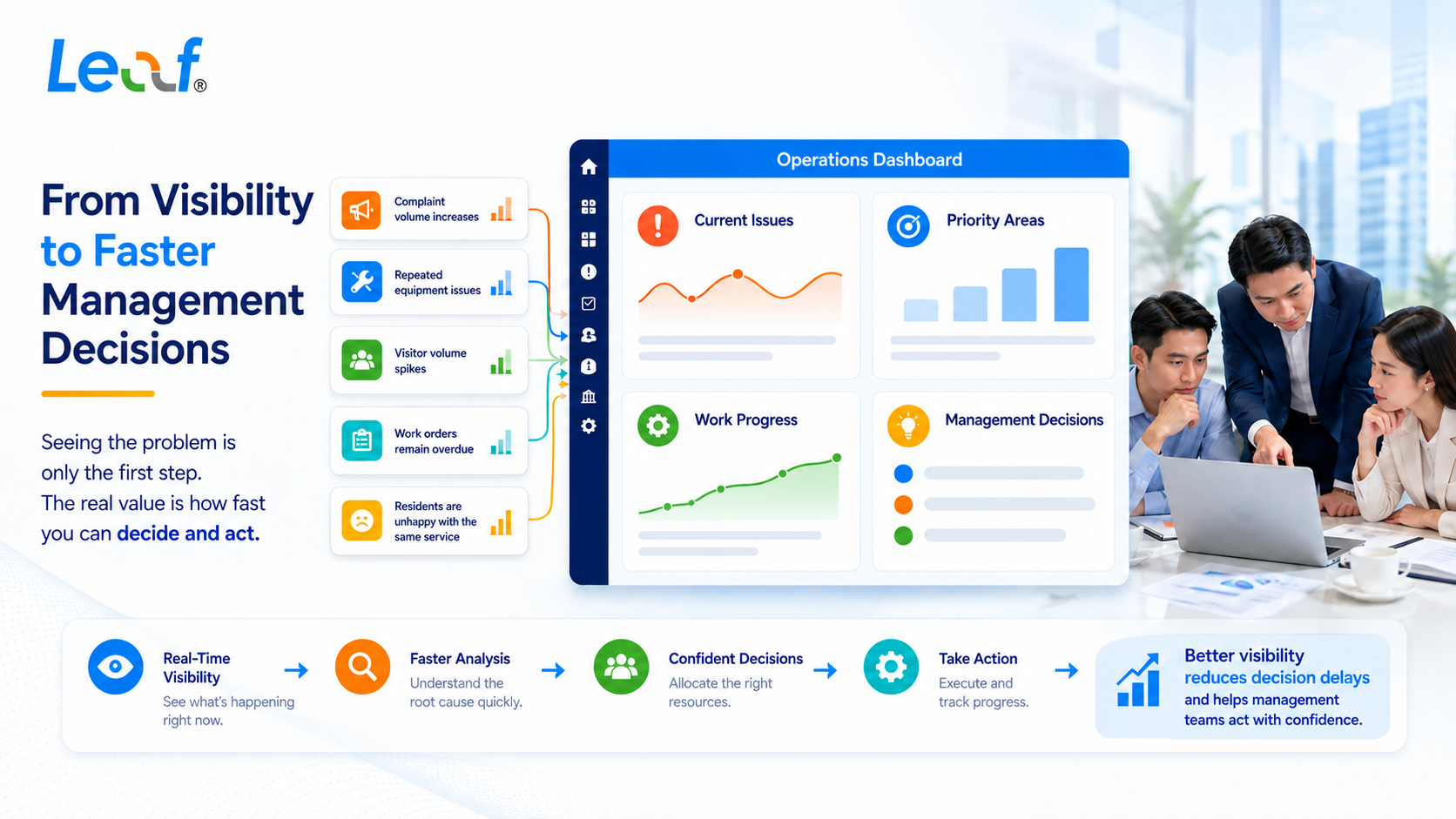
Property Operations Dashboard: From Visibility to Faster Management Decisions