
Self Check-In Kiosk: 3 Ways to Improve Lobby Flow
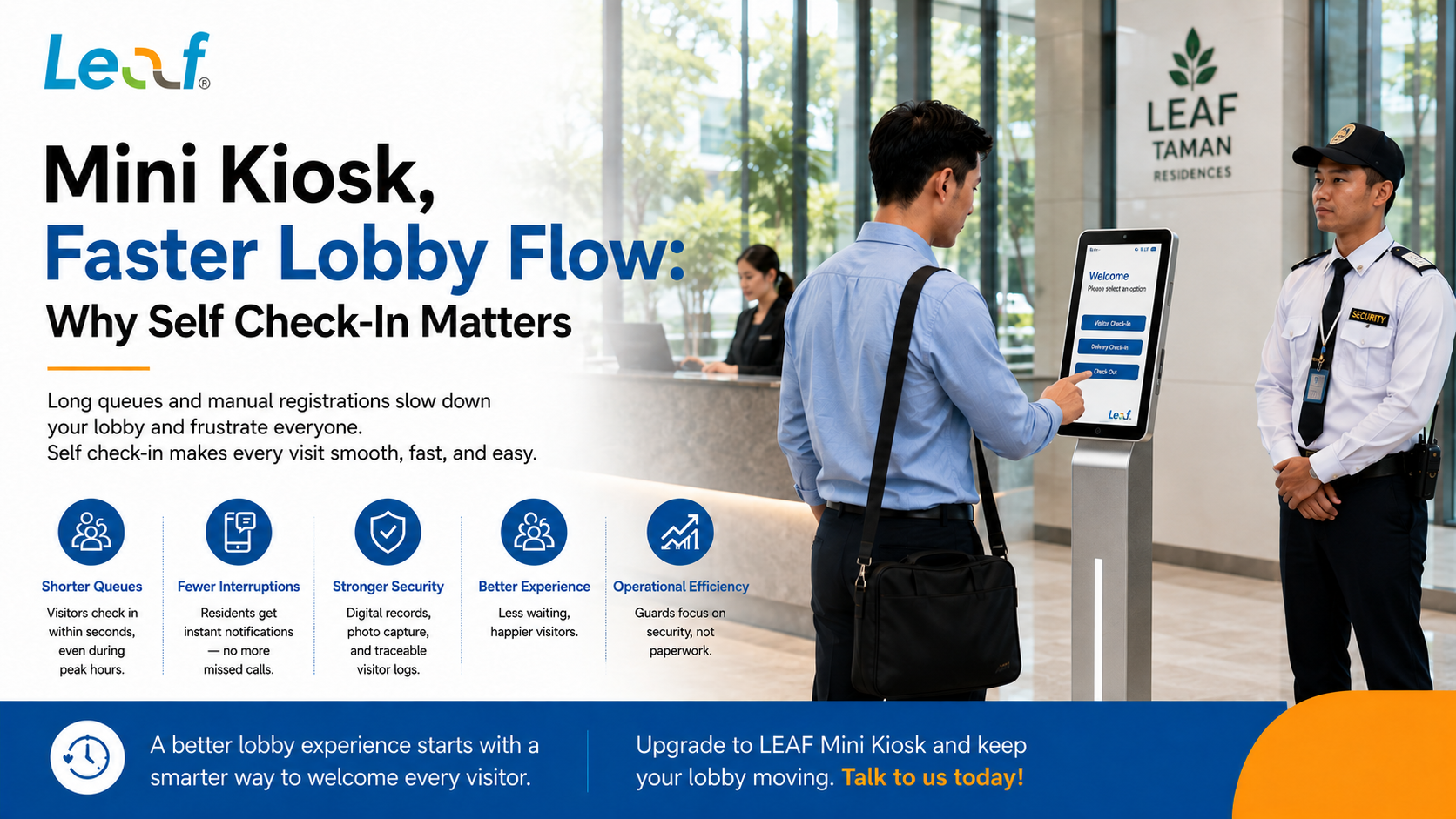
A self check-in kiosk helps visitors register faster while giving guards and management teams better control over lobby flow during peak hours.
In busy residential and commercial buildings, the lobby is often the first place where operational efficiency is tested. Visitors arrive during morning rush hours, delivery riders queue at the entrance, contractors need access for scheduled work, and residents’ guests may arrive at the same time.
When everything depends on manual visitor registration, delays become difficult to avoid.
That is why more modern properties are moving toward self check-in systems powered by Mini Kiosks. A better check-in process helps reduce waiting time, improve visitor experience and create a smoother visitor management workflow.
1. A Self Check-In Kiosk Reduces Queues at the Lobby
The lobby should keep people moving.
However, traditional visitor registration often slows the entrance flow. Guards may need to write down visitor details, verify unit numbers, contact residents for approval and manage multiple arrivals at once.
During peak hours, this creates unnecessary pressure.
Common problems include:
Longer visitor queues
Slower entry approvals
More interruptions for residents
Higher workload for guards
Congestion at the guardhouse or lobby counter
Even a well-managed building can feel disorganised when visitors are waiting, guards are overloaded and approvals are delayed.
A self check-in kiosk helps reduce this friction. Instead of depending entirely on manual assistance, visitors can start the registration process digitally. This helps move people through the lobby faster and gives guards more space to manage real security matters.
To see how small operational delays build up over time, read The Daily 5-Minute Delay That Adds Up to Hours Every Week.
2. A Mini Kiosk Makes Visitor Registration More Consistent
A smooth visitor check-in process is not only about speed. It is also about consistency.
When visitor details are collected manually, records may be incomplete, unclear or difficult to read. During busy periods, guards may need to handle several things at the same time, increasing the chance of missing information.
With a Mini Kiosk, visitors can register through a more structured digital process.
Depending on the building’s visitor workflow, visitors may be able to:
Scan QR invitations
Enter visitor details digitally
Confirm unit or host information
Support faster identity verification
Notify residents or management more clearly
Create cleaner visitor records
This helps reduce repeated manual data entry and improves the quality of visitor information captured at the entrance.
For management teams, more consistent records make it easier to review visitor activity, trace previous visits and maintain better operational visibility.
3. Self Check-In Helps Guards Focus on Security
Guards should not spend most of their time doing repetitive paperwork.
Their main responsibility is to manage access, observe activity, respond to unusual situations and maintain safety. When guards are occupied with manual registration, approval calls and handwriting checks, their attention is divided.
A self check-in kiosk helps reduce repetitive front desk tasks so guards can focus on higher-value security responsibilities.
This does not remove the role of guards. Instead, it supports them with a better workflow.
With a clearer visitor registration process, guards can spend less time on basic data capture and more time checking exceptions, managing access control and assisting when human judgement is needed.
This creates a more professional lobby experience for residents, visitors, guards and management teams.
Why Modern Buildings Need Better Lobby Flow
In 2026, people expect digital convenience in many areas of daily life. They use mobile banking, QR payments, online booking and digital communication every day.
When a building still relies entirely on paper-based visitor registration, the entrance experience can feel outdated.
A better lobby flow helps a property feel:
More efficient
More secure
More organised
More professional
Easier to manage
The entrance is often the first impression of a property. If the check-in process is slow, confusing or heavily manual, it affects how residents and visitors experience the building.
Improving daily property operations can start with improving how people enter the building.
How LEAF Mini Kiosk Supports Smarter Visitor Workflows
LEAF Smart Community’s Mini Kiosk helps buildings streamline visitor check-ins with faster self registration, digital visitor records and smoother lobby operations.
Instead of treating visitor registration as a purely manual task, LEAF helps property teams build a clearer visitor workflow from arrival to record keeping.
With LEAF Mini Kiosk and digital visitor management tools, buildings can reduce lobby congestion, improve visitor tracking, support faster registration and give management teams better visibility over visitor activity.
The goal is not only to install a kiosk. The goal is to improve the full visitor journey and reduce unnecessary operational pressure at the entrance.
If you want to explore smarter property workflows, visit our AI Solutions page.
Make Lobby Flow Faster and Smarter
A self check-in kiosk helps busy properties reduce queues, improve visitor registration and support smoother daily operations.
When visitors can register faster, guards can work more effectively and management teams can access cleaner records, the entire building experience becomes more organised.
With LEAF Smart Community, property teams can move from manual visitor registration to smarter lobby flow supported by digital workflows and better operational visibility.
Contact LEAF today to discover how self check-in can improve your building experience.
Related posts
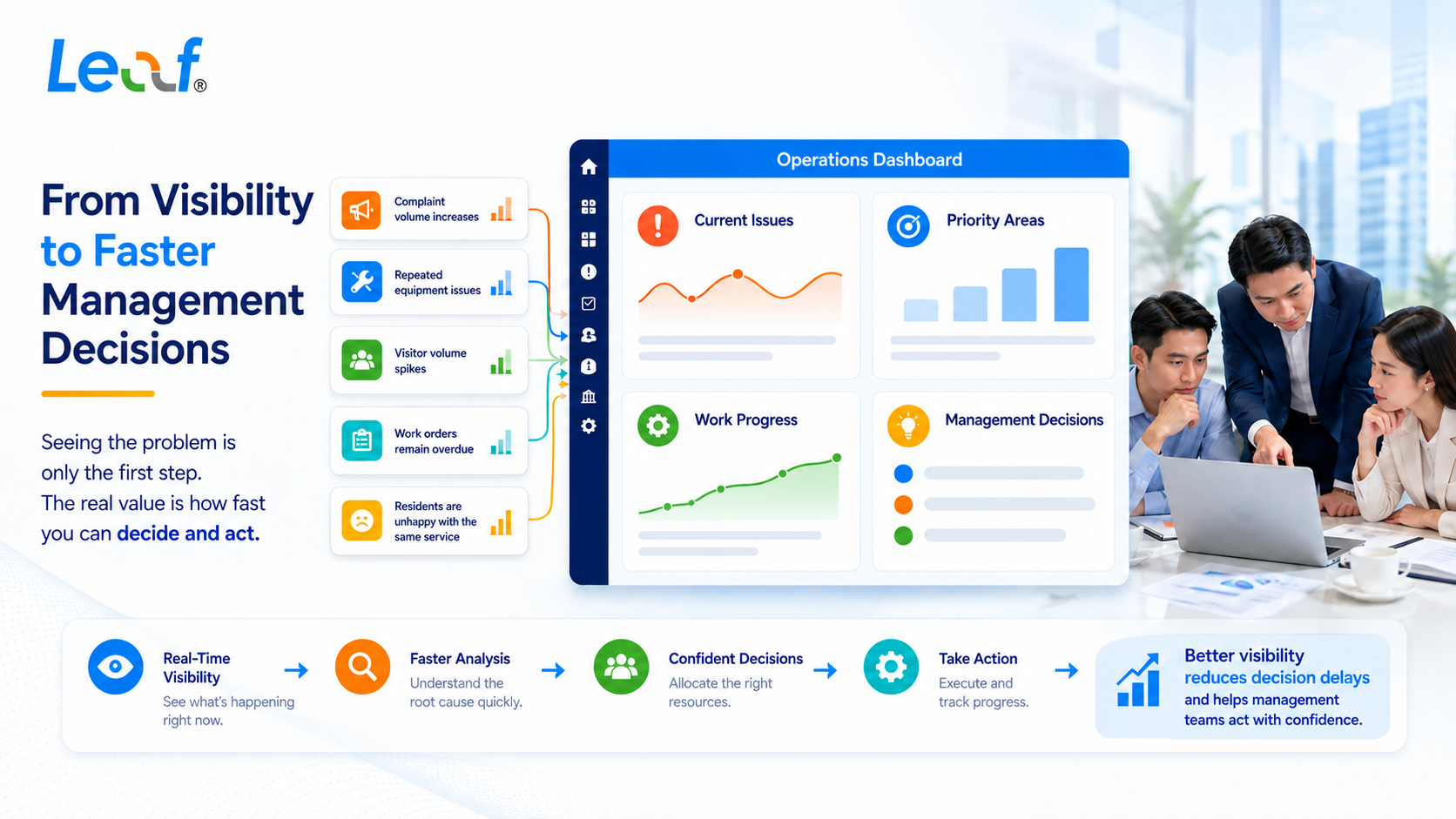
Property Operations Dashboard: From Visibility to Faster Management Decisions
1 Comment
Comments are closed.
Pingback: Guardhouse Bottleneck: Why It Slows Building Operations