
Smart Community Management: What Truly Matters
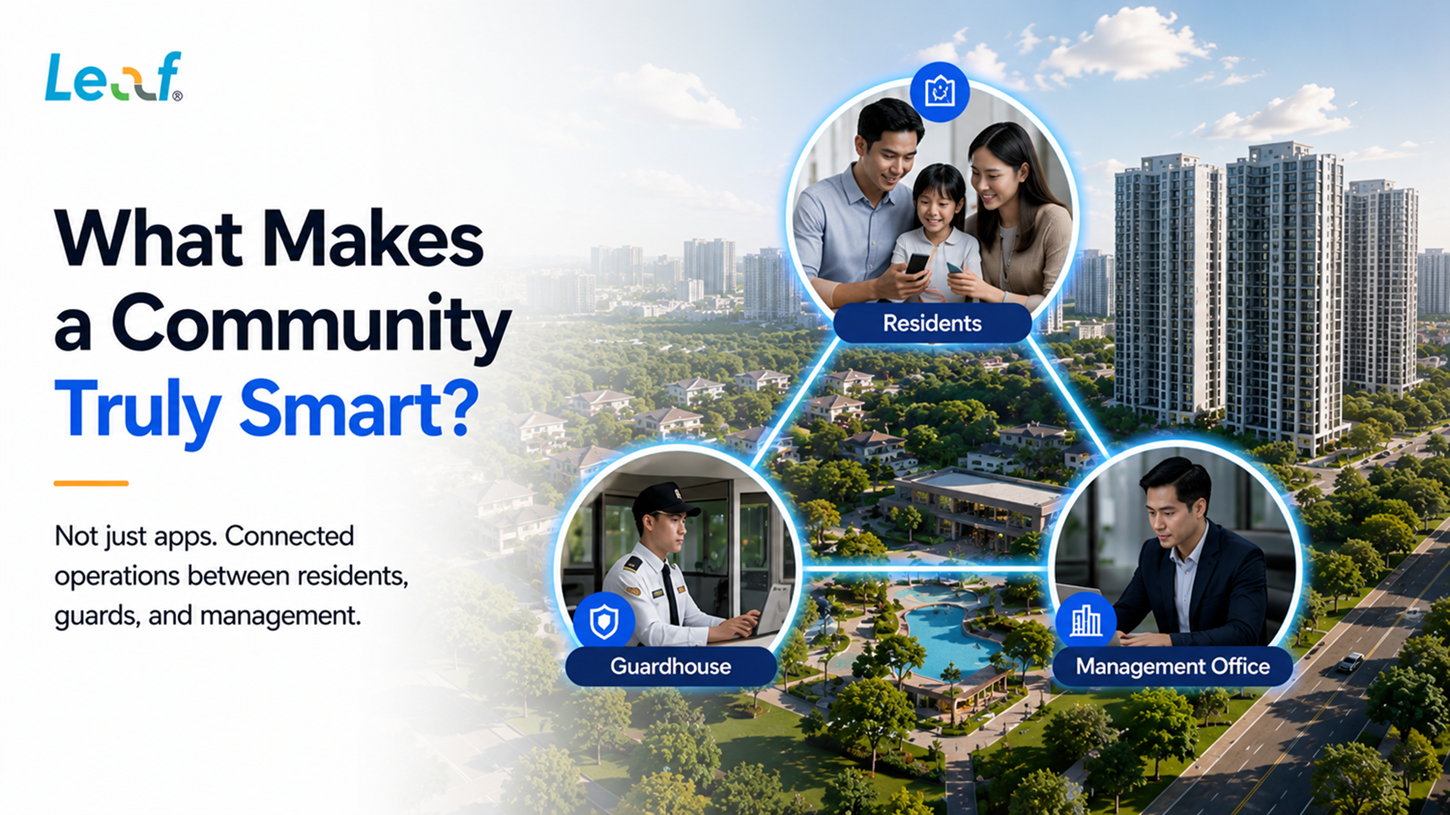
Smart community management is not only about digital tools. It is about helping residents, guards, and management teams stay connected through clearer workflows, better visibility, and more consistent communication.
When people hear the term “smart community,” they often think about mobile apps, digital access cards, QR visitor passes or online facility booking.
These features are useful. They can make daily services faster and more convenient. But a truly smart community is about more than having digital tools.
The real value comes from how well those tools support daily property operations, connect different teams and make important information easier to see and act on.
Smart Communities Are Built on Connected Workflows
Many communities already use digital systems. The challenge is that these systems often work separately.
Residents may submit requests through one platform. Guards may manage visitors through another system. Management teams may still track complaints, maintenance issues or approvals using spreadsheets, phone calls, WhatsApp messages or paper records.
Each tool may be useful on its own. But when information is disconnected, daily operations become slower, harder to monitor and more difficult to manage.
For example, a resident may submit a maintenance request, but the guard team may not see the update. A visitor may be approved, but the management office may not have a clear record. A complaint may be acknowledged, but the follow-up status may be hidden in a separate chat.
A smart community brings these workflows together into one more connected operational ecosystem.
To see how visibility improves coordination, read our article on property operations visibility.
Every Stakeholder Should Stay Connected
A well-managed community depends on smooth coordination between different people and teams.
Residents need clear updates on services, requests, visitors, maintenance matters and community announcements.
Guards need accurate visitor, access and security information so they can manage the entrance more confidently.
Management teams need reliable records, task visibility, complaint status, maintenance progress and operational oversight.
When everyone works from the same source of information, communication becomes clearer and daily tasks are easier to manage.
This is where smart community management becomes practical. It is not only about giving users an app. It is about making sure the right people can access the right information at the right time.
Technology Should Simplify Daily Operations
The goal of smart community technology is not to add more systems.
The goal is to reduce manual work, avoid duplicated effort and improve visibility across daily operations.
If a building has too many disconnected tools, staff may still need to copy information, chase updates, repeat explanations and manually check different systems. This can create more work instead of less.
A better smart community workflow helps property teams:
Manage visitors more efficiently
Track complaints and maintenance requests
Keep residents informed
Improve accountability across teams
Create better operational visibility
Reduce repeated manual coordination
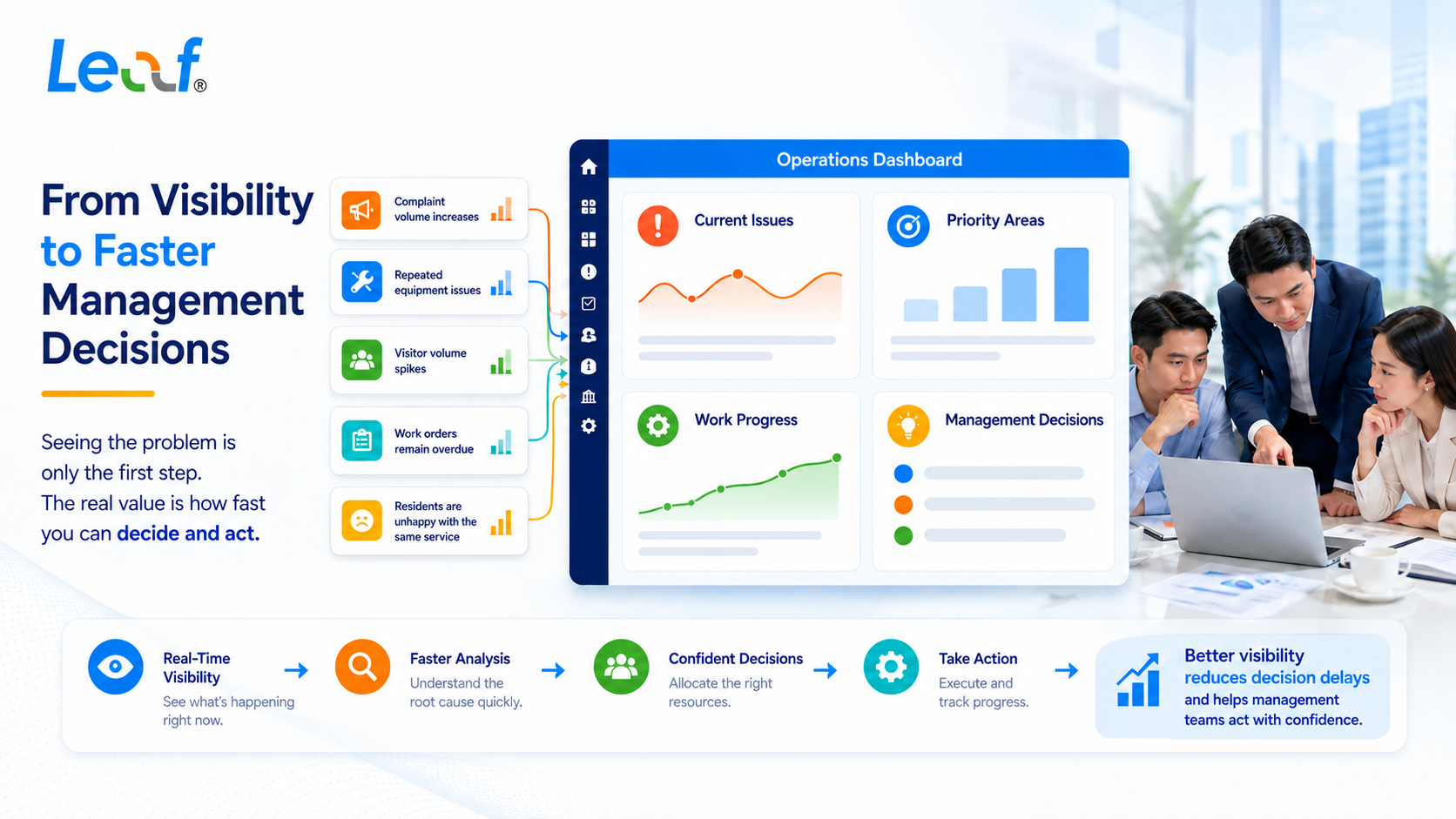
Support faster management decisions
The result is a smoother experience for residents, guards and management teams.
Smart Living Starts Behind the Scenes
Residents may not always see the systems running in the background.
What they notice is the outcome.
They notice whether visitor entry feels smooth. They notice whether complaints receive proper updates. They notice whether maintenance issues are followed up. They notice whether the management team appears organised and responsive.
A smart community should help create:
Faster responses
Better communication
Smoother visitor management
More organised operations
Clearer resident updates
Higher confidence in the management team
This is what makes a community feel modern, reliable and well-managed.
Smart living does not only happen through visible features. It also depends on the operational workflows behind the scenes.
Why Visibility Matters in Smart Community Management
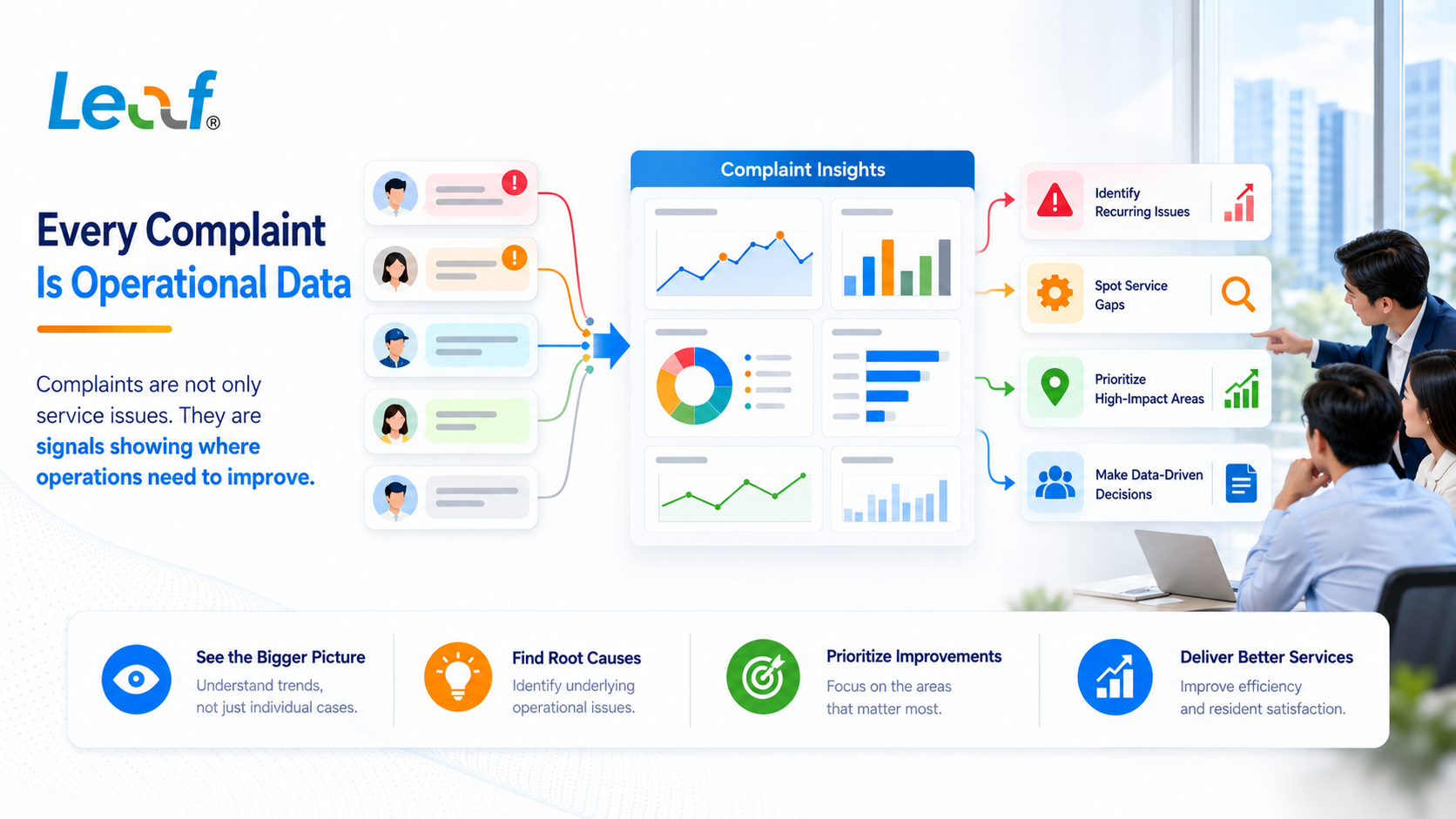
Without visibility, management teams may only react when residents ask for updates or when issues become urgent.
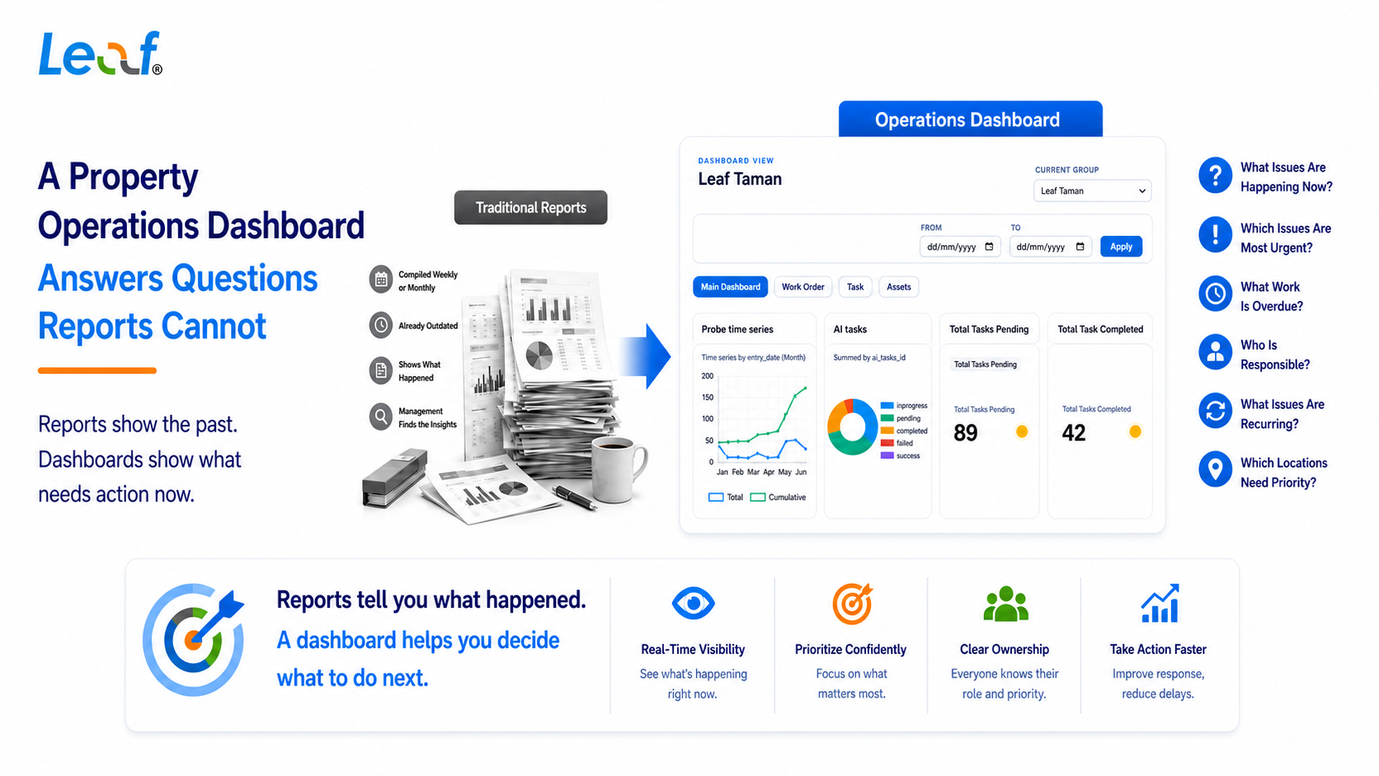
With better visibility, teams can monitor what has been reported, who is responsible, what is still pending and what has already been completed.
This helps reduce repeated complaints, missed follow-ups and unclear task ownership.
For property managers, visibility is important because daily operations involve many moving parts: visitors, residents, guards, vendors, maintenance teams, committees and management staff.
A smart community platform should help connect these moving parts into a clearer operating structure.
How LEAF Supports Smarter Community Operations
LEAF Smart Community helps connect residents, guards and management teams through one platform designed for smarter community management.
From visitor management and resident communication to complaint tracking, maintenance follow-up and operational visibility, LEAF helps communities move beyond separate tools into a more connected property management workflow.
The goal is simple: help property teams reduce scattered communication, centralise important updates and manage daily operations more clearly.
For property managers looking for a smarter condo system or a more connected approach to community operations, LEAF provides a practical way to improve daily management.
If you want to explore practical tools for smarter operations, visit our AI Solutions page.
Build a Smarter, More Connected Community
A smart community is not defined by how many digital features it has.
It is defined by how well residents, guards and management teams can work together through clearer workflows, better visibility and more consistent communication.
With LEAF Smart Community, property teams can build a more connected operating environment that supports smoother daily work and a better community experience.
Contact LEAF today to discover how connected workflows can improve your property operations.
Related posts
Property Operations Dashboard: From Visibility to Faster Management Decisions
1 Comment
Comments are closed.
Pingback: Property Operations Dashboard: Faster Management Decisions