WhatsApp Complaint Management: 5 Problems to Fix
WhatsApp complaint management is common in many property and community management teams. It feels fast, familiar and easy to start. Residents already use WhatsApp, management teams can respond quickly, and creating a complaint group takes only a few seconds.
At the beginning, this may seem practical.
But as the number of residents, buildings, facilities and daily issues grows, WhatsApp complaint management becomes harder to control. Updates, ownership and follow-up history are often spread across separate chats, making it difficult for the team to track what has been done and what still needs attention.
The challenge is not communication.
The real challenge is accountability.
1. Messages Can Get Buried Too Easily
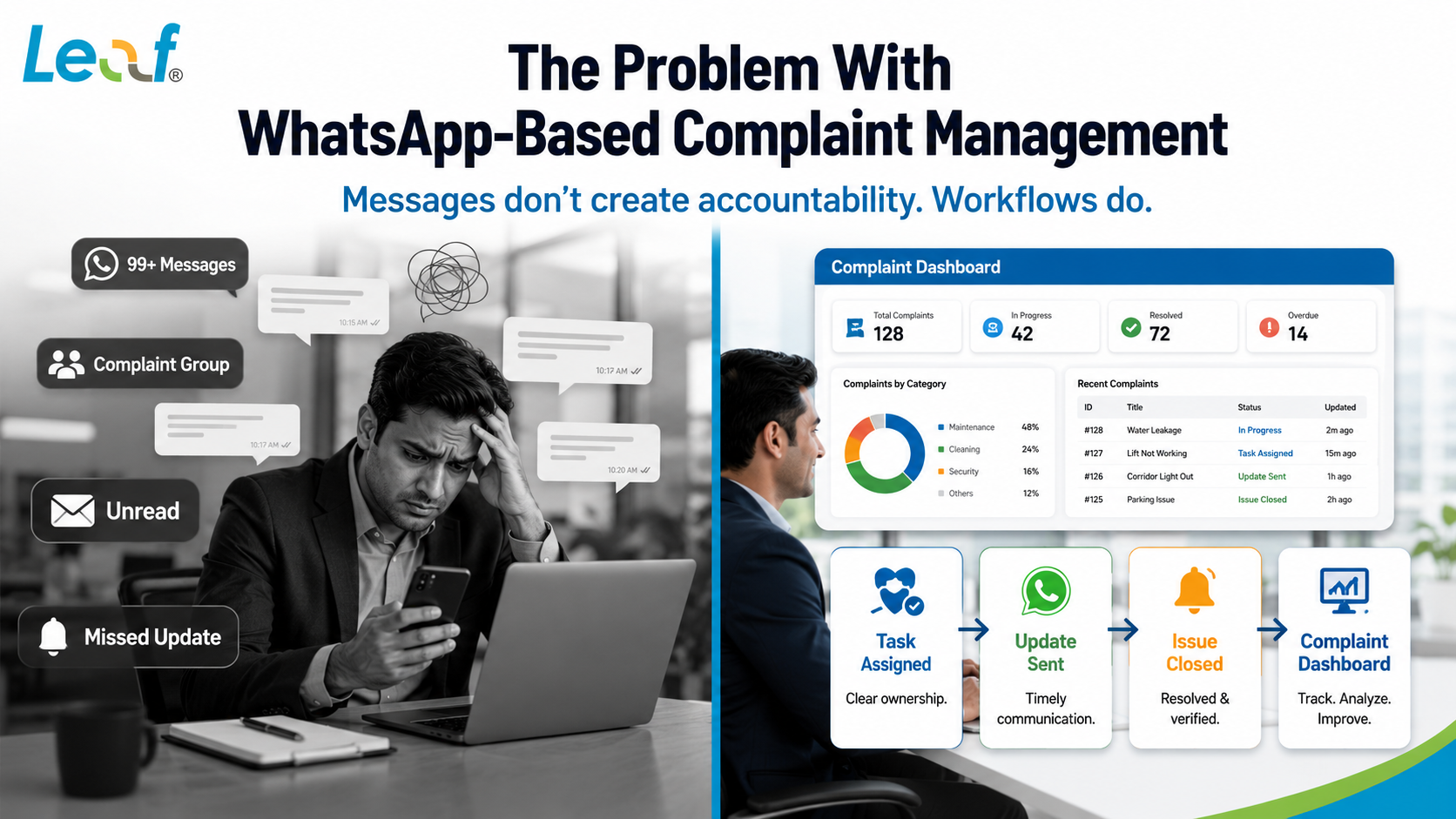
A WhatsApp conversation is a stream of messages. It is useful for quick communication, but it is not designed to manage structured complaint workflows.
For example, a resident may report a leaking pipe in the morning. Later, another resident asks about the lift. A technician replies in the afternoon. A committee member follows up in another chat. By the end of the day, the original complaint may be buried under dozens of new messages.
When this happens, the team may need to scroll through chat history just to understand the latest status.
This slows down daily operations and increases the risk of missed follow-up.
2. Complaint Ownership Is Often Unclear
In property management, every complaint needs a clear person in charge.
If a resident reports a maintenance issue, the team should know who is responsible for checking it, assigning the technician, updating the resident and closing the case.
In WhatsApp, this ownership is often unclear. A staff member may reply, another person may contact the vendor, and someone else may promise an update. But without a proper complaint tracking system, it can be difficult to confirm who is actually responsible for the next action.
This creates common questions such as:
Has anyone assigned this complaint?
Who is handling the technician?
Has the resident been updated?
Is this issue still pending or already completed?
When ownership is not visible, accountability becomes harder to manage.
3. Follow-Up History Is Difficult to Track
Many resident complaints require more than one action.
A maintenance request may involve receiving the complaint, confirming the location, checking the issue, contacting a vendor, getting approval, scheduling repair work and updating the resident.
If these updates are scattered across WhatsApp messages, emails and phone calls, the team may not have a clear follow-up history.
This becomes a bigger problem when staff change shifts, managers need to review progress or residents ask for updates again.
Without structured records, the team may spend more time checking past conversations than moving the issue forward.
4. Duplicate Complaints Become Harder to Manage
In many communities, several residents may report the same problem.
For example, if a lift breaks down or a car park light is not working, multiple residents may send separate WhatsApp messages. Some may send the complaint to the management office, some may send it to a committee group, and others may message staff directly.
Without proper resident complaint tracking, the same issue may appear as several separate complaints.
This creates duplicated work, repeated replies and confusion about whether the issue is new, ongoing or already being handled.
A structured complaint management workflow helps group related complaints, track the main issue and provide clearer updates to everyone involved.
5. Managers Have Poor Visibility Over Daily Issues
WhatsApp is useful for conversation, but it does not give managers a full operational view.
A manager cannot easily see how many complaints are still open, which cases are overdue, which staff member is handling each issue or which vendors are waiting for confirmation.
This lack of visibility affects service quality.
Residents do not always expect every issue to be solved immediately. But they do expect clear updates and responsible follow-up.
When management teams can see complaint status, task ownership, latest updates and completion history, they can respond faster and reduce repeated enquiries from residents.
Why Complaint Tracking Matters
A proper complaint tracking system turns conversations into structured workflows.
Instead of asking, “Has anyone replied?” or “Where is the latest update?”, the team can clearly see:
Who is responsible
Current task status
Latest progress update
Pending action
Completion history
Every complaint should move through a clear process from report to resolution.
Nothing should depend only on memory, chat scrolling or informal follow-up.
WhatsApp Is a Communication Tool, Not a Complaint Management System
WhatsApp is an excellent communication tool. It helps residents and management teams stay connected.
However, it should not be the only place where complaints are managed.
As communities grow, property teams need a better workflow for complaint tracking, maintenance follow-up, resident updates and management visibility.
Clear workflows help reduce missed tasks, duplicated work and poor accountability.
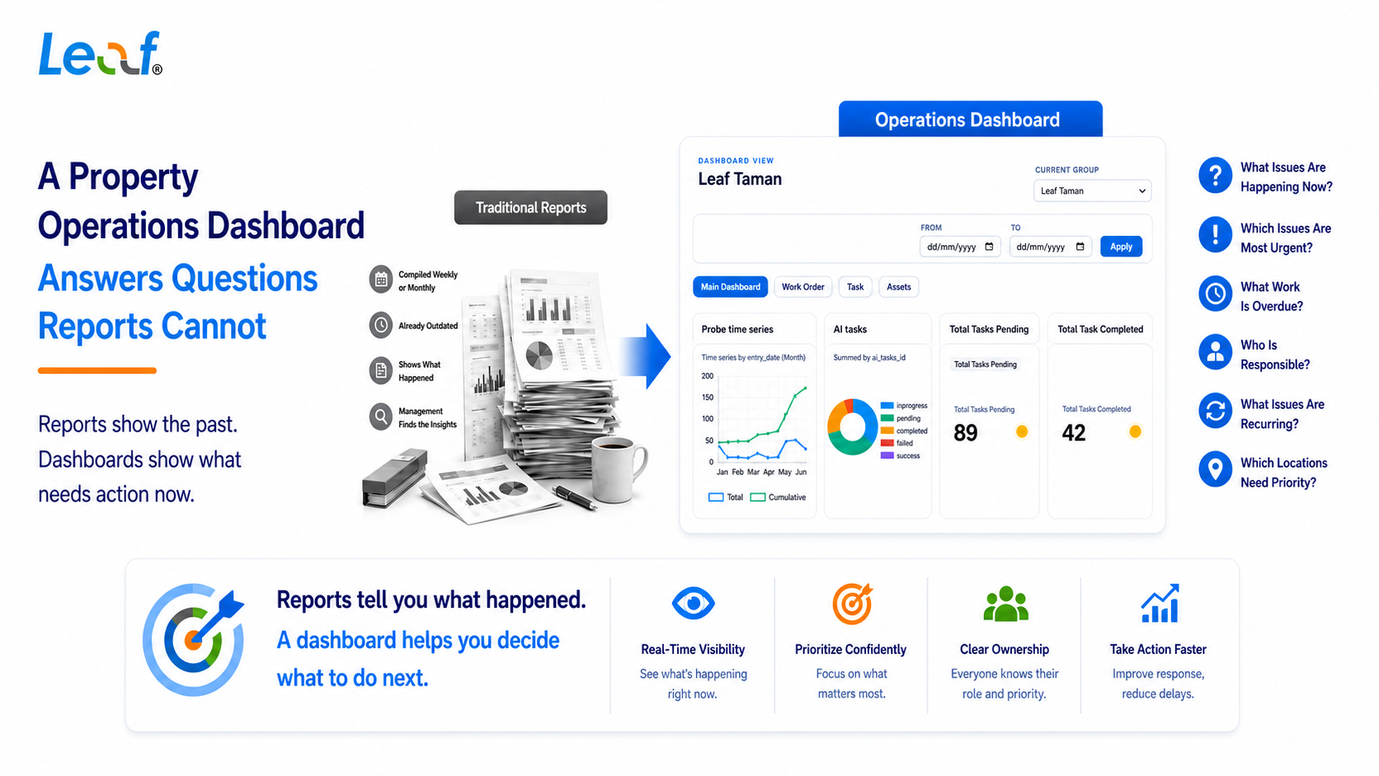
To see why clearer tracking reduces delays, read our article on property operations visibility.
Smarter Complaint Management Starts with LEAF
LEAF Smart Community helps property and community management teams centralise complaints, updates and operational follow-up in one platform.
Instead of leaving important issues scattered across WhatsApp chats, LEAF helps teams turn incoming complaints into organised workflows with task assignment, complaint tracking, progress updates and real-time dashboards.
This gives property teams better visibility over what has been reported, who is handling it, what action is pending and whether residents have been updated.
If you want a better workflow for complaints and updates, explore our AI Solutions page.
Improve Complaint Visibility and Accountability
WhatsApp can support communication, but property teams need more than messages to manage complaints properly.
They need clear ownership, structured follow-up and better visibility across daily operations.
With LEAF, property management teams can move from scattered conversations to organised complaint workflows that support faster action, clearer updates and stronger accountability.
Contact LEAF today to discover how a smarter complaint tracking system can improve your property’s daily operations.
Related posts
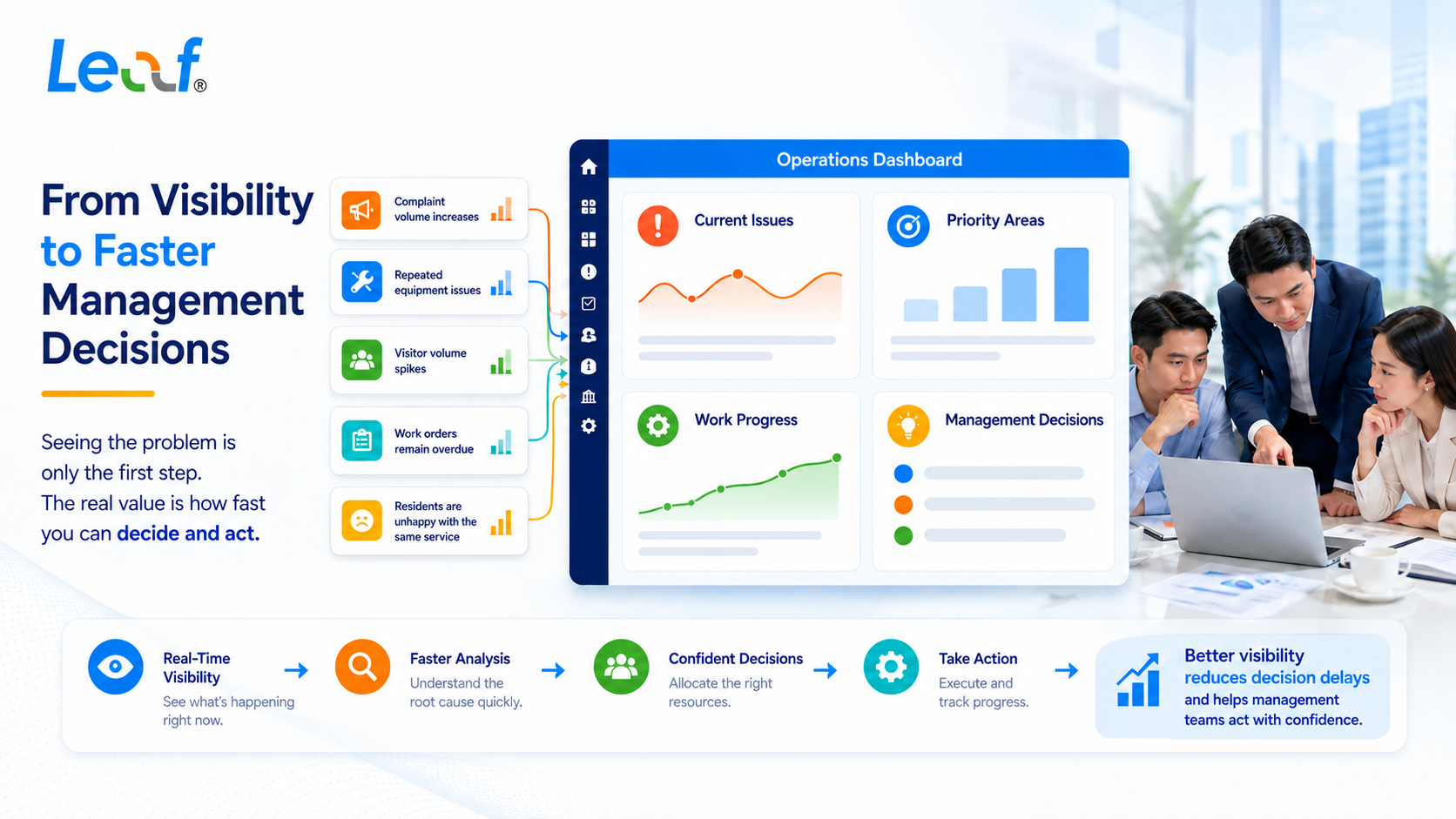
Property Operations Dashboard: From Visibility to Faster Management Decisions