Why Connected Operations Matter in Smart Property Management
Property management is becoming increasingly digital.
From resident communication to maintenance coordination and daily reporting, technology is now part of many property management activities.
However, more digital tools do not automatically create smarter operations.
The real value of smart property management comes from helping management teams understand what is happening, recognise important concerns and make better-informed decisions.
The future is not simply about adding more technology.
It is about creating clearer, more connected property operations.
Smart Property Management Is More Than Digital Tools
Many properties have introduced digital solutions to support daily management.
These tools can improve individual activities, but challenges may remain when information is scattered across different systems, teams or communication channels.
Management teams may still need to compare updates, review separate records or contact multiple people to understand an issue.
This can create unnecessary administrative work and slow management decisions.
Smart property management should focus on making daily operations easier to understand, not simply increasing the number of tools available.
To understand how technology is changing property management, read our AI in Property Management article.
Why Connected Operations Matter
Property operations involve many connected activities.
Resident concerns may relate to maintenance work. Facility conditions may affect service quality. Visitor activity may influence daily staffing requirements.
These matters should not always be viewed in isolation.
Connected property operations help management teams understand how different activities may affect the wider property.
This can support:
Clearer understanding of daily operations
Better coordination between management teams
Earlier recognition of emerging concerns
More informed resource planning
Greater consistency in service delivery
The objective is not to collect more information.
It is to make existing information more useful for management.
Better Visibility Supports Better Decisions
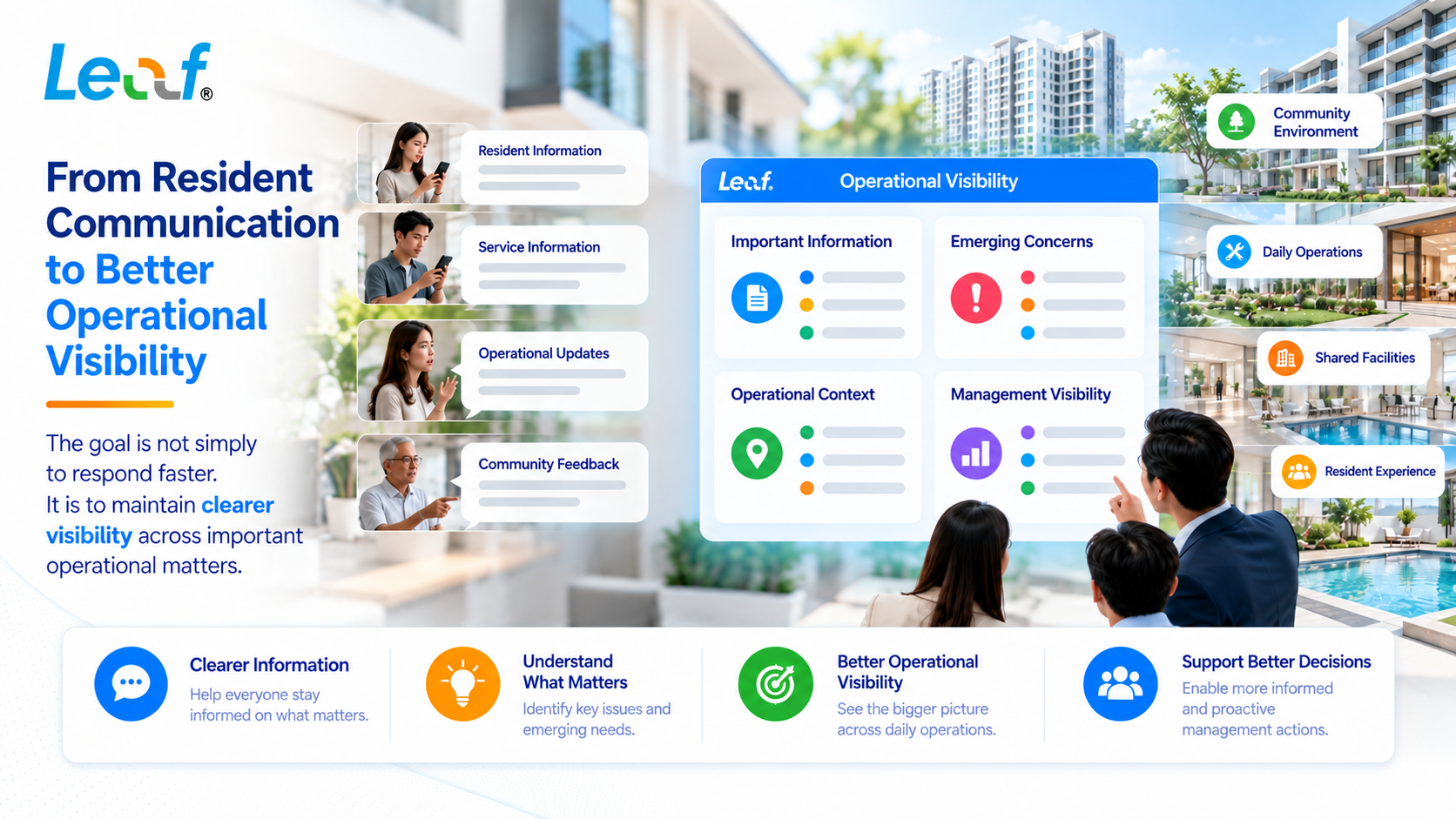
Operational visibility is an important part of smart property management.
When management teams have a clearer understanding of current conditions, they can identify concerns earlier and focus attention where it matters.
For example, management may need to understand whether:
A service concern is becoming more frequent
Maintenance issues are affecting multiple facilities
Operational delays require additional attention
Resident feedback indicates a wider service gap
Available resources match current operational needs
Clearer information helps property managers, JMBs and MCs discuss these matters with greater confidence.
Rather than relying only on individual impressions or scattered updates, teams can consider the wider operational situation.
Better visibility does not replace management judgement.
It provides a stronger foundation for applying that judgement.
To learn how better visibility can support faster management decisions, read our Property Operations Dashboard article.
Efficiency Comes From Better Coordination
Property management efficiency is not simply about completing tasks faster.
It also involves reducing unnecessary work, avoiding repeated information checks and improving coordination.
When daily information is easier to understand, management teams can spend less time searching for updates and more time addressing important operational matters.
This can create more opportunities to focus on:
Service quality
Resident experience
Maintenance planning
Operational improvements
Long-term property performance
The purpose of connected operations is to support people in managing properties more effectively.
Better efficiency comes from clearer coordination, not simply from using more technology.
The Role of Automation in Future Property Management
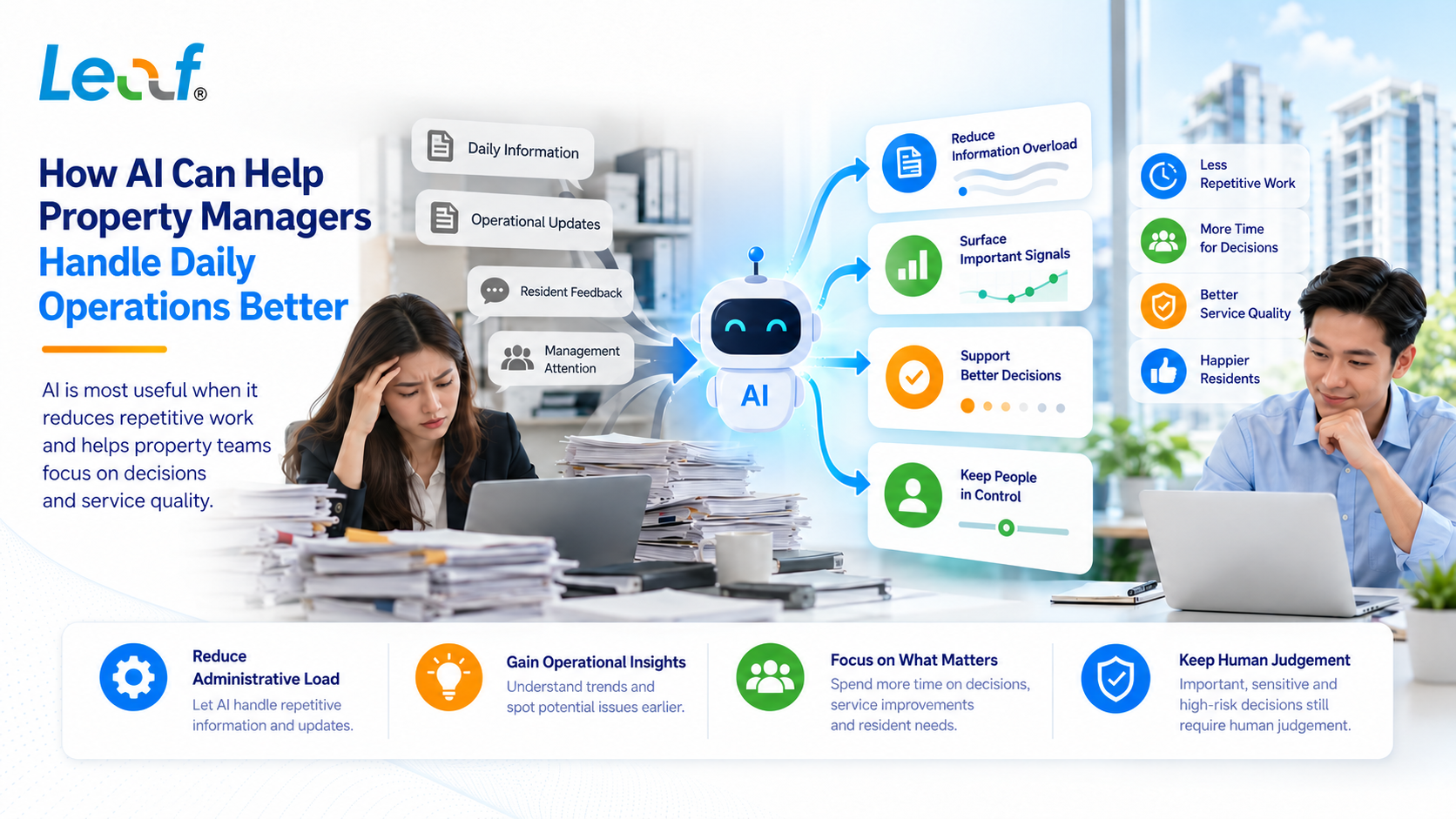
Property management automation can help reduce repetitive administrative work and support more consistent operations when introduced with a clear purpose.
However, automation should address real operational challenges rather than simply adding another layer of technology.
The key is to identify where manual processes cause delays and introduce automation only where it delivers practical operational value.
Important, sensitive and high-risk decisions should continue to involve appropriate human oversight.
Technology should strengthen management capability, not remove management accountability.
Connected Operations Support Long-Term Improvement
Smart property management should not focus only on today’s activities.
It should also help management teams understand how operations can improve over time.
A clearer operational picture can support discussions about recurring service concerns, resource needs and opportunities for improvement.
This matters because long-term service quality depends on more than resolving individual issues.
It requires management teams to recognise patterns, understand operational challenges and continuously review how the property is managed.
Connected operations provide a stronger foundation for these improvements.
For more information about turning daily records into useful management insights, read our Property Data Insights article.
The Future of Smart Property Management
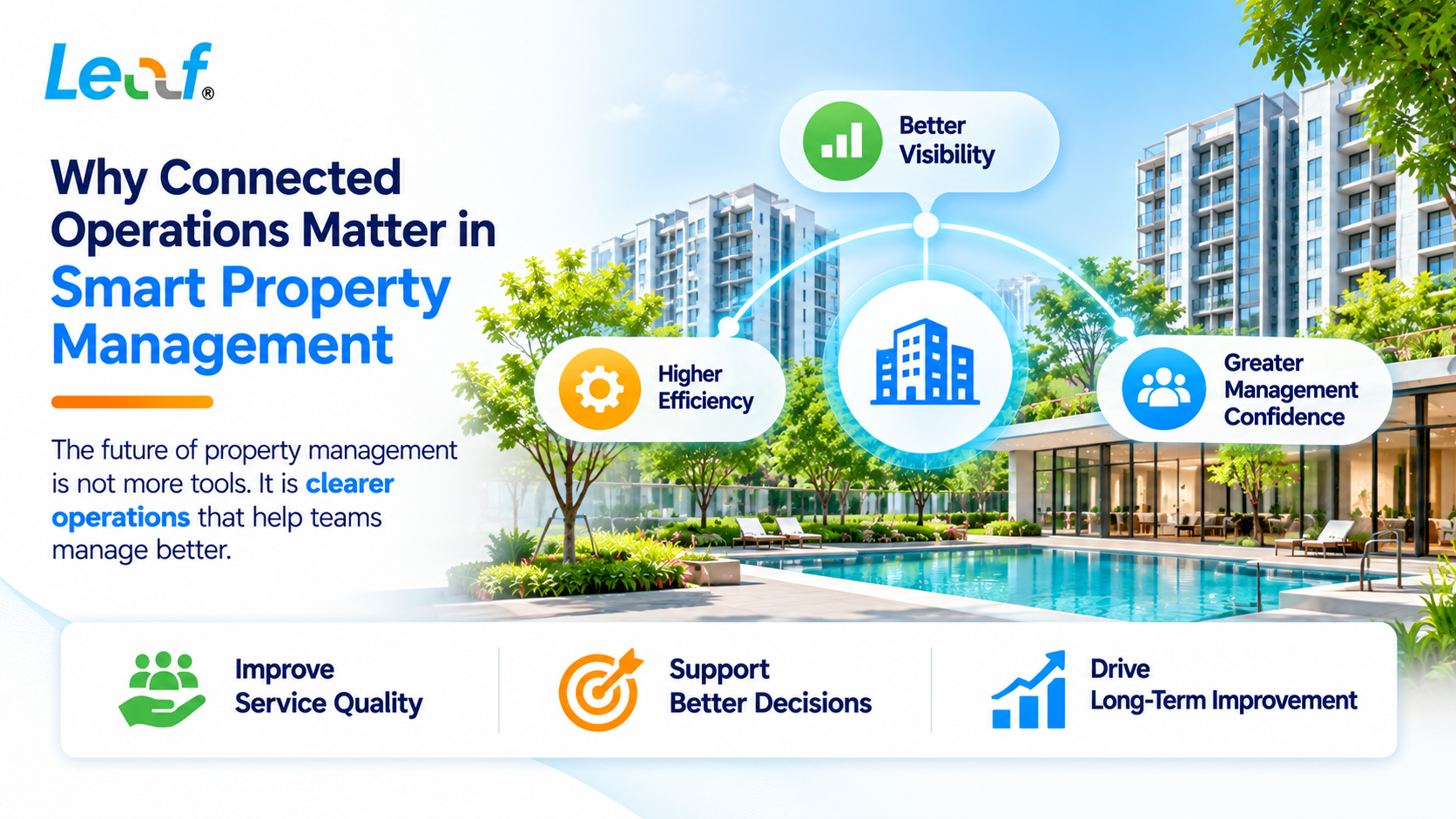
The future of property management will likely place greater emphasis on operational visibility, efficiency and management confidence.
Technology will continue to evolve, including connected platforms and automation.
However, successful digital transformation should not be measured only by the number of features or systems introduced.
The more important questions are:
Can management teams understand daily operations more clearly?
Can important concerns be recognised earlier?
Can teams coordinate with less unnecessary effort?
Can management make decisions with greater confidence?
Can operational information support long-term improvement?
These are the outcomes that make technology valuable.
The future of smart property management should focus on practical improvements that help teams manage better.
Connected Operations Should Support People and Service Quality
Connected operations are not only about improving internal efficiency.
They can also help property management teams recognise service concerns earlier, coordinate more effectively and respond to changing community needs.
However, technology alone does not create better service quality.
Property managers, building staff and service providers still need to apply their experience, judgement and local knowledge.
The purpose of smart property management is to give people clearer information, stronger coordination and better support when making decisions.
Technology should make property management easier to manage, not more complicated.
Final Thought
Smart property management is not defined by how many digital tools a building uses.
It is defined by how effectively management teams understand operations, coordinate responsibilities and make informed decisions.
Connected operations create opportunities for clearer visibility, greater efficiency and continuous service improvement.
As technology evolves, the real priority should remain the same: helping people manage properties better.
The future of property management is not more tools. It is clearer operations that help teams manage better.
Building Smarter Property Operations with LEAF
LEAF helps property management teams improve operational visibility, support better coordination and make more informed management decisions.
As properties become increasingly digital, the goal should remain practical: clearer operations, better management and stronger community experiences.
Explore LEAF to learn more about smarter property management.
Related posts