Every property generates operational information every day, from resident concerns and service activity to access records, facility usage and management updates.
The challenge is not collecting information. It is understanding what that information means.
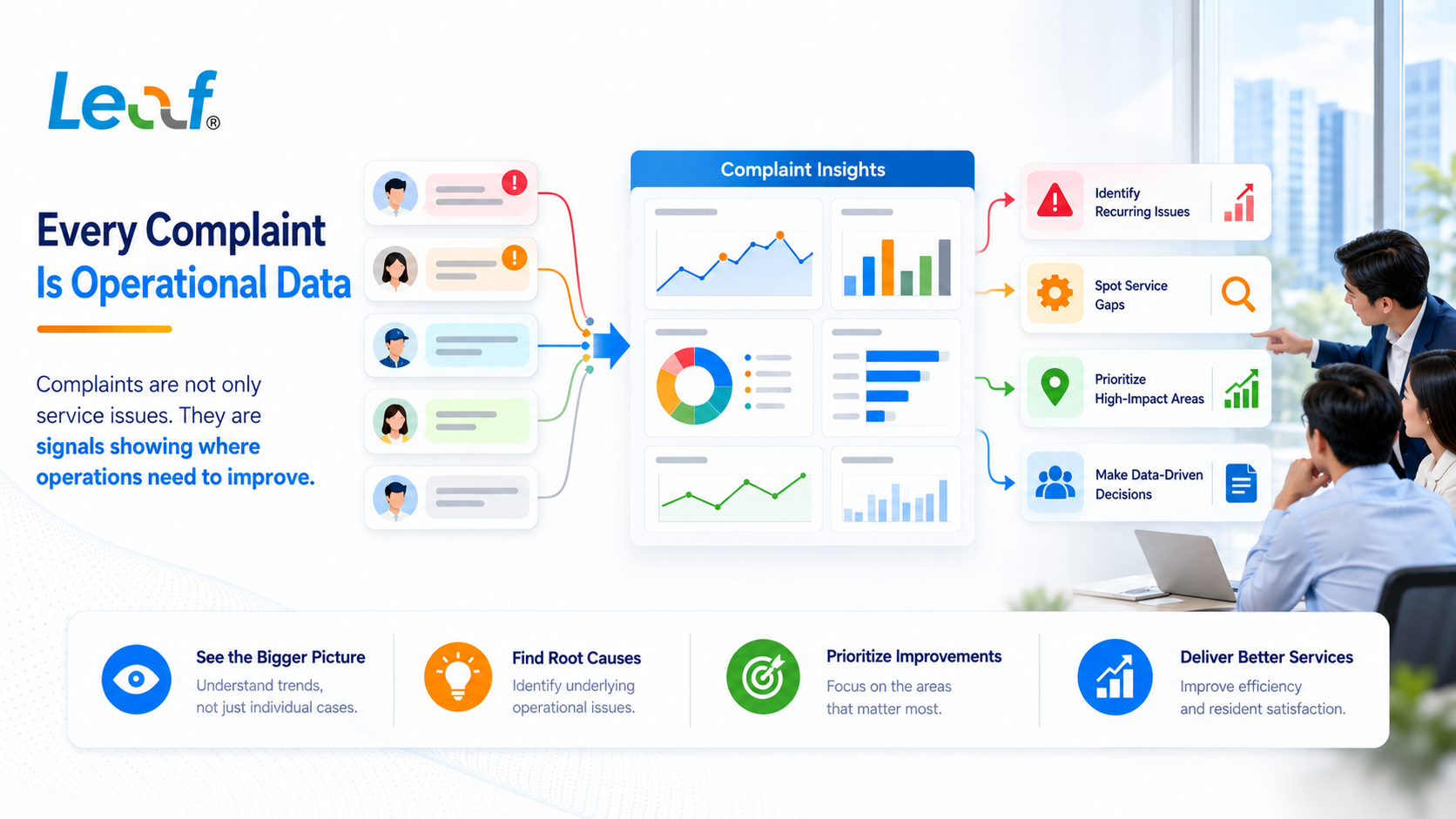
An individual record may describe one event. But when similar information is reviewed consistently over time, it can reveal recurring issues, delay patterns, cost concerns and service gaps.
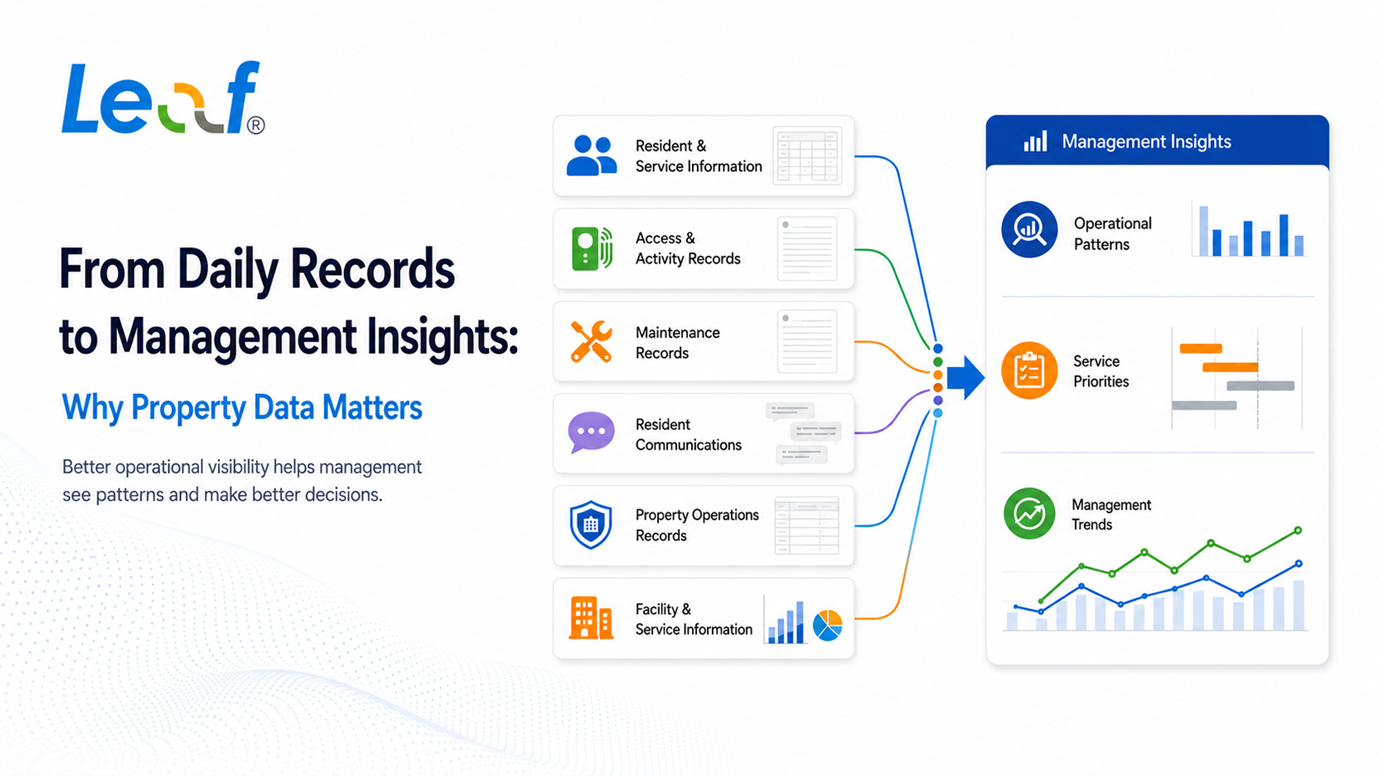
That is why property data matters. Its value is not simply in being recorded. Its value is in helping management see patterns and make better decisions.
Daily Records Are Not the Same as Management Insights
Most property management teams already handle a large amount of operational information.
However, individual records often show only part of the picture. One resident concern may appear to be an isolated case. One service delay may seem like a temporary issue. One facility problem may not appear significant on its own.
But when similar signals continue to appear, they may point to a wider operational pattern.
This is the difference between storing information and understanding operations.
Records tell management what happened.
Insights help management understand what may be happening repeatedly, where attention may be needed and what should be reviewed next.
Fragmented Information Makes Patterns Harder to See
Operational information is often spread across different documents, conversations, reports and daily records.
Each piece of information may be accurate on its own. But when information is difficult to review together, the overall picture becomes less clear.
This can make it harder for management teams to:
- Recognise repeated issues early
- Understand where delays are occurring
- Compare trends over time
- Identify possible service gaps
- Review cost and resource concerns
- Make decisions based on complete information
When information remains fragmented, teams may only respond after an issue becomes visible or urgent.
A clearer view of daily operations allows management to pay attention to patterns before they become larger concerns.
To explore this topic further, read our article on Property Operations Visibility.
From Individual Events to Operational Patterns
Property data becomes more useful when management can review it consistently over time.
It allows management teams to ask more useful questions:
- Which issues appear most frequently?
- Which areas require closer attention?
- Are certain service concerns recurring?
- Where are delays or inefficiencies becoming visible?
- Which issues may require a deeper review?
- What should management improve next?
These are not only administrative questions.
They are management questions that support better planning, service quality and long-term improvement.
The goal is not to collect more information for its own sake. The goal is to understand what the information is showing.
Better Visibility Supports Better Decisions
Management teams often need to make decisions about priorities, resources, service quality and future improvements.
Without a clear view of operational information, these decisions may rely heavily on individual experience or incomplete updates.
Better visibility provides a stronger basis for management discussions.
It helps teams move from:
- Individual cases to wider patterns
- Assumptions to clearer evidence
- Late responses to earlier awareness
- Short-term responses to longer-term improvement
This does not mean every issue can be predicted or prevented.
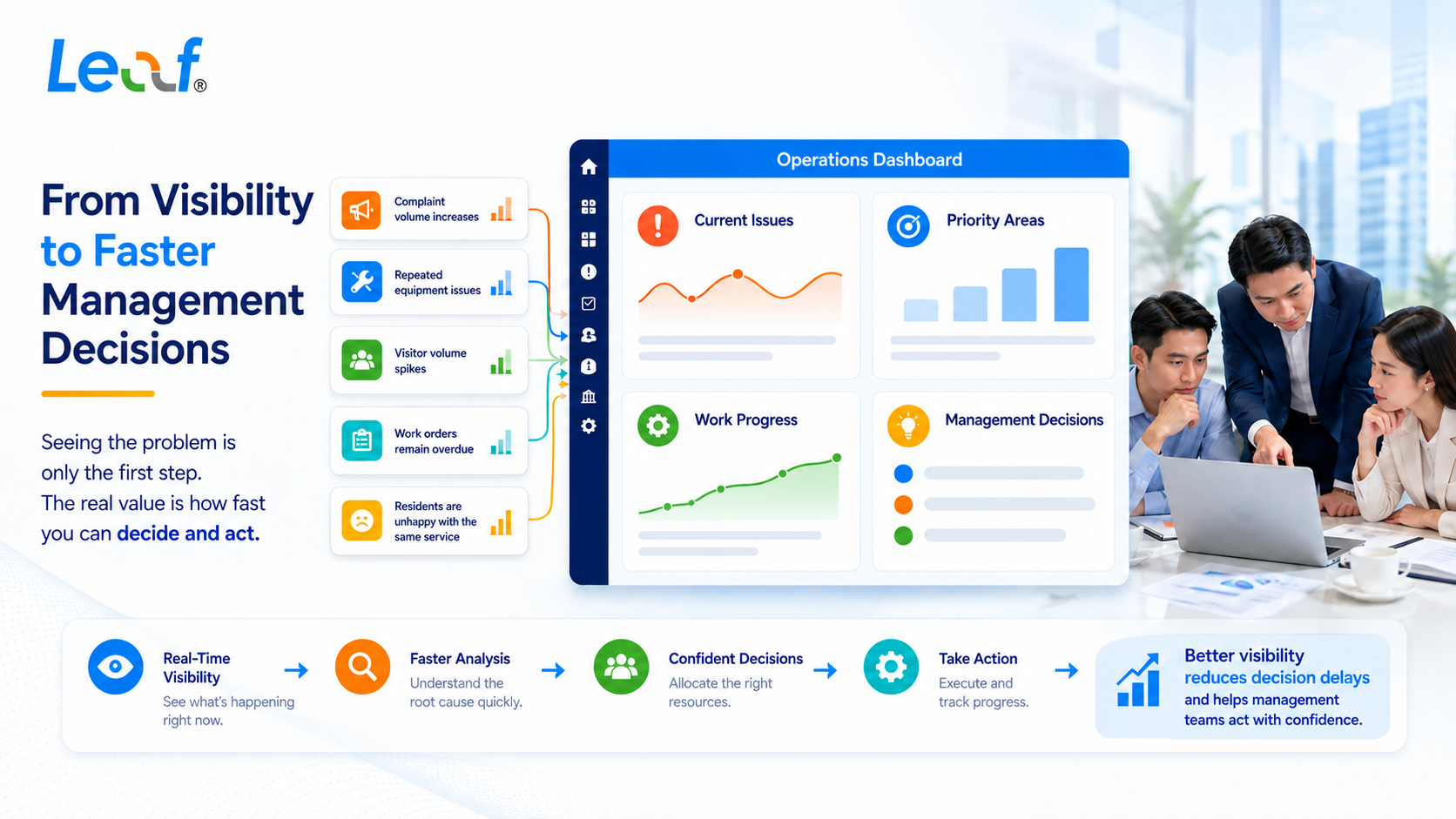
It means management teams have a better opportunity to identify concerns earlier and decide where attention is most needed.
From Reactive Management to Earlier Awareness
Many property teams operate reactively because daily information is difficult to review as a whole.
They respond when residents raise concerns, when delays become serious or when a report highlights a problem.
This is understandable in busy property environments.
However, a clearer understanding of operational information can help management move towards earlier awareness.
Instead of asking only:
What happened today?
Management teams can also ask:
Is this happening repeatedly?
What may be causing it?
Where should we focus next?
What improvement would have the greatest impact?
These questions help shift the focus from individual incidents to the broader quality of property operations.
A Practical Perspective for Modern Property Management
As properties and communities become busier and more complex, residents expect clearer communication, management committees need a clearer view of operations, and service teams must respond to changing needs.
The answer is not simply to create more records or add more tools.
The more important question is whether the available information helps management understand the property more clearly.
For property and community management teams, useful data should support better conversations, stronger priorities and more informed decisions.
It should help management understand what is happening, where attention may be needed and how daily operations can improve over time.
Property Data Matters When It Improves Decisions
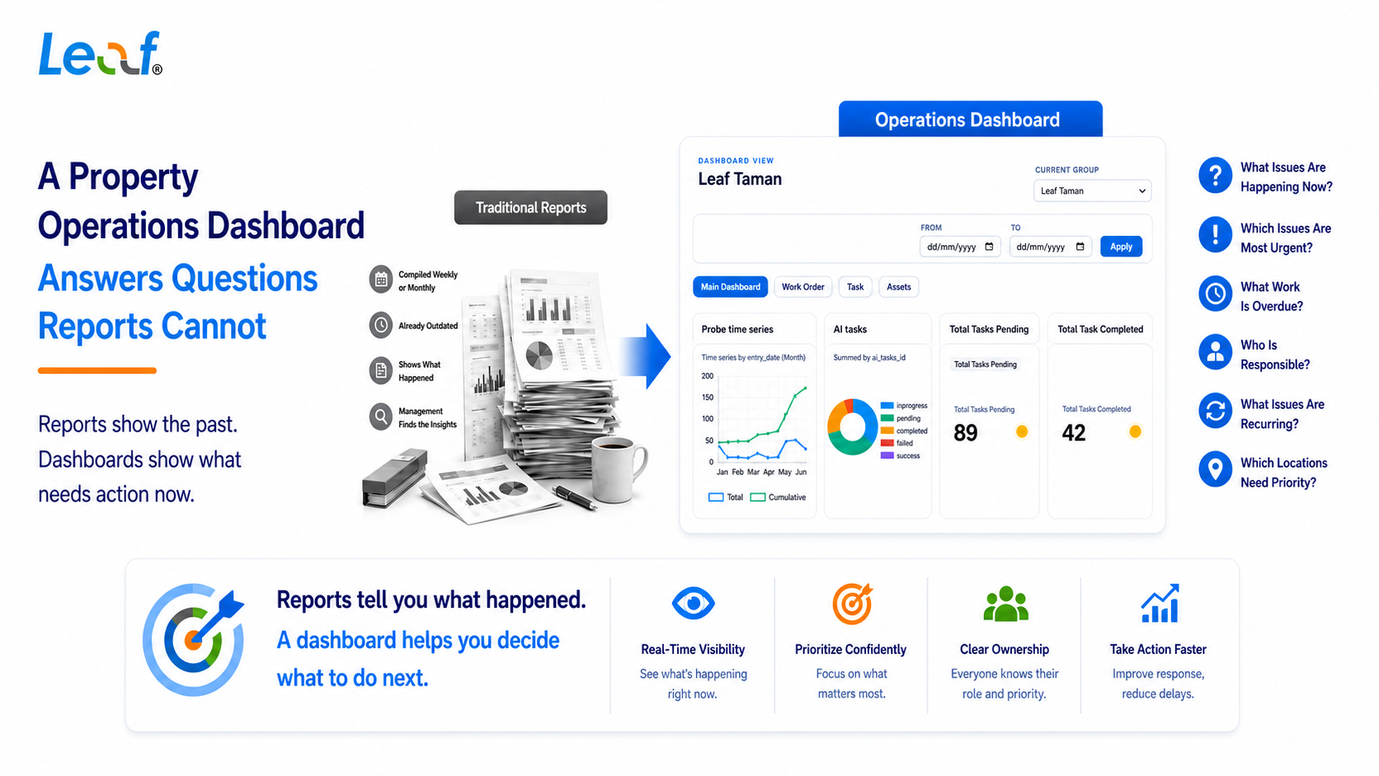
A record tells management what happened.
An insight helps management understand what it may mean.
For modern property management, this difference matters.
When daily operational information is easier to review, management teams can identify patterns, understand recurring concerns and plan improvements with greater confidence.
The goal is not simply to collect information for reporting.
The goal is to help management see what needs attention next.
Property data is valuable only when it helps management see patterns and make better decisions.

Pingback: Property Management Follow-Up: The Hidden Cost of Repeated Updates