The Hidden Cost of Repeated Follow-Up in Property Management
Property management follow-up often takes more time than teams realise.
Management teams regularly respond to resident concerns, service matters, vendor updates and internal questions. Follow-up is a normal part of daily property operations.
However, repeated follow-up is a different problem.
When the same issue requires several messages, calls or status checks, the cost is not limited to inconvenience. It uses staff time, delays service, increases frustration and can weaken residents’ trust in the management process.
Poor follow-up does more than create frustration.
It creates measurable operational cost.
What Repeated Follow-Up Really Means
Repeated follow-up often happens when information is incomplete, responsibilities are unclear or updates are difficult to see.
Staff may need to spend additional time checking the background of an issue, looking for the latest information and confirming what should happen next.
Each individual check may seem small. But across a busy property, these activities can accumulate quickly.
A resident may ask for an update because the previous response was unclear. A service provider may need additional information before continuing. A management team may need to review the same issue several times before understanding its current position.
The problem is not that people are unwilling to help.
The problem is that too much time is being spent trying to understand where things stand.
The Hidden Cost of Poor Follow-Up
Repeated follow-up creates several types of operational cost.
Time Cost
Every follow-up takes time.
Staff may need to review previous information, confirm the latest update and communicate with different people before they can respond confidently.
A five-minute check may not seem significant. But when similar checks happen many times a day, the total impact becomes much larger.
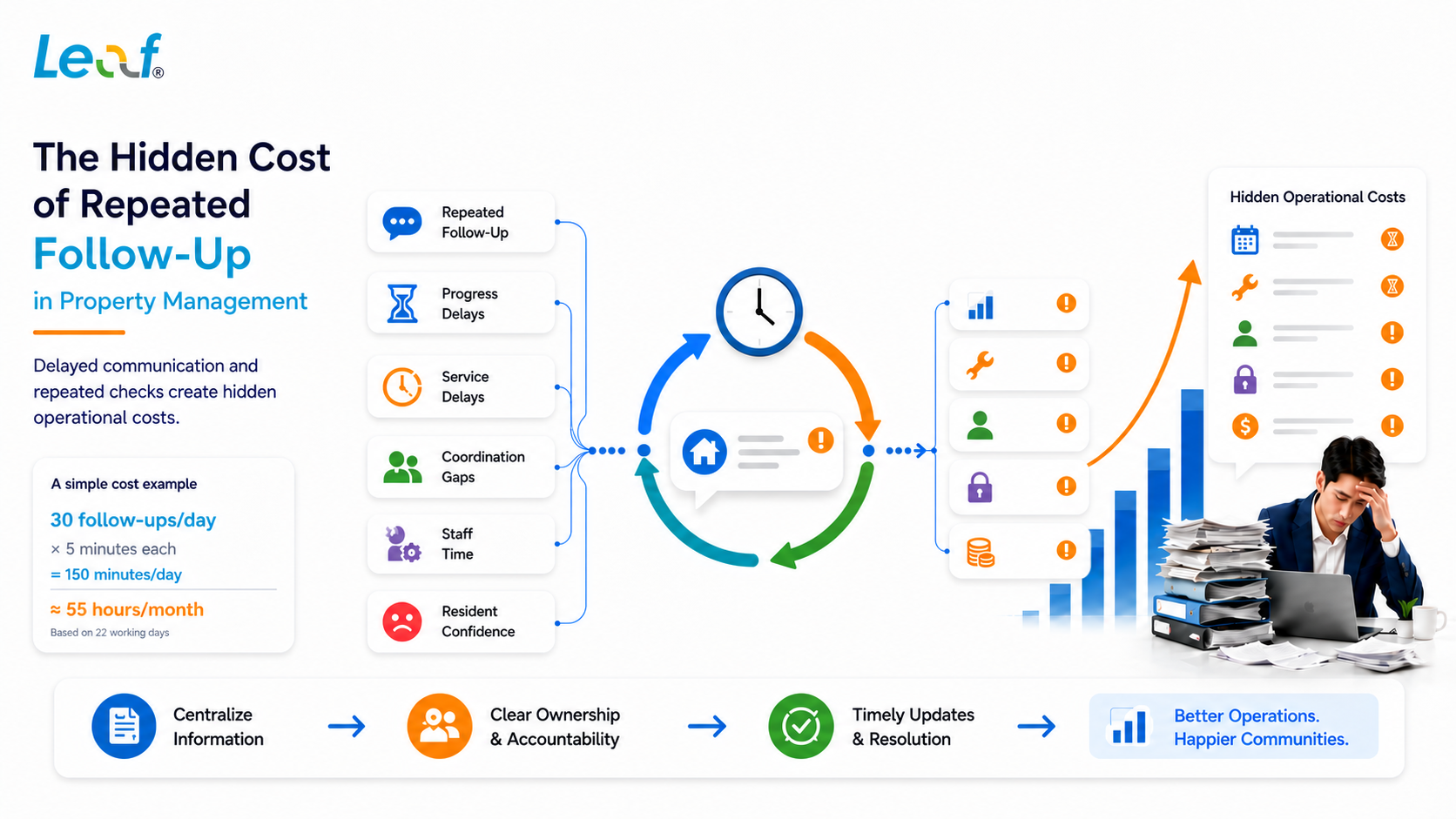
Consider a simple example:
30 follow-ups per day
5 minutes per follow-up
150 minutes per day
2.5 hours per working day
55 hours per month, based on 22 working days
This is not a measurement of one specific property. It is a simple illustration of how quickly repeated follow-up can become a significant operational cost.
That time could otherwise be used for resident service, inspections, planning, preventive work or management review.
Service Cost
Repeated follow-up can also affect service quality.
When information is unclear, a small delay may become a longer service issue. Residents may need to ask again before receiving an update. Service providers may need to clarify the same matter more than once. Management teams may spend additional time checking whether progress has been made.
The longer an issue remains unclear, the more effort may be needed to resolve it.
This creates additional pressure on staff and can make daily operations feel more complicated than they need to be.
Trust Cost
Residents may not see the work happening behind the scenes.
They usually experience the service through the clarity of the response, the timing of the update and the final outcome.
When residents repeatedly need to ask for progress, they may feel that the issue is not receiving enough attention.
Over time, this can reduce confidence in the management team, even when staff are working hard to handle the situation.
Trust is built through consistency. Clearer follow-up plays an important role in maintaining that trust.
Why Follow-Up Keeps Repeating
Repeated follow-up usually points to a wider visibility problem.
Common causes may include:
Information spread across different records
Unclear communication between people or teams
Changes in priorities
Delays in receiving updates
Gaps between the original concern and the final outcome
Limited visibility of recurring issues
Different people working with different parts of the information
When these conditions exist, people compensate by asking more questions and sending more messages.
Communication is then used to replace clarity.
But more communication does not always create better control.
A team can exchange many messages and still lack a clear understanding of what is happening.
Communication Is Not the Same as Visibility
Communication is essential in property management.
Residents, management teams, service providers and other stakeholders need to exchange information every day.
The issue is not the number of messages.
The issue is whether important information remains clear after the conversation takes place.
A message may explain what happened at one moment. Better visibility helps management understand the wider situation over time.
It allows teams to consider:
Whether a concern is isolated or recurring
Whether delays are becoming more common
Whether service quality is improving
Whether a particular area needs closer attention
Whether a management decision should be reviewed
This is the difference between receiving information and understanding operations.
Better Follow-Up Begins With Better Visibility
Better follow-up does not necessarily mean sending more updates.
It begins with a clearer understanding of what is happening across daily operations.
With better visibility, management teams can spend less time searching for information and more time considering the right response.
They can identify recurring concerns earlier, recognise where delays may be developing and focus attention on issues that may have a wider impact.
This also supports better management discussions.
Instead of relying only on individual impressions, teams can review patterns and make decisions based on clearer information.
To understand how property data can support better management decisions, read our article on From Daily Records to Management Insights: Why Property Data Matters.
From Chasing Updates to Managing Outcomes
Repeated follow-up often keeps teams focused on individual updates.
A better management approach is to look at the broader outcome.
The important questions are not only:
Has someone replied?
Has another update been received?
Has the issue been mentioned again?
Management teams should also consider:
Has the concern been properly understood?
Is the situation improving?
Is the same issue appearing repeatedly?
Is the service outcome meeting expectations?
What should be improved in the future?
This shifts the focus from activity to results.
It also helps management teams identify where additional attention may be needed.
4 Questions for Better Property Management Follow-Up
Before reviewing follow-up practices, management teams can ask four simple questions:
1. Are repeated concerns being recognised?
If similar concerns continue to appear, they may represent a wider issue rather than separate incidents.
2. Can management see where delays are developing?
Understanding delay patterns can help teams review whether changes are needed in service planning, communication or resource allocation.
3. Are priorities clear when several concerns arise?
Not every issue has the same level of urgency or impact. Clear priorities help management focus attention where it is most needed.
4. Does each issue lead to a clear outcome?
A conversation or update is only one part of the service experience. The final outcome is what affects residents’ confidence and the quality of daily operations.
The Goal Is Not Fewer Messages
The goal is not to eliminate communication.
Property management depends on regular communication between residents, management teams and service providers.
The goal is to reduce unnecessary follow-up while making important communication more useful.
When information is clearer, teams can spend less time repeating questions and more time resolving concerns, improving services and planning ahead.
Better follow-up should create greater confidence for everyone involved.
Residents should have a clearer understanding of what is happening. Management teams should have a stronger basis for decisions. Service teams should be able to focus on the work that matters most.
Final Thought
Repeated follow-up is often treated as a normal part of property management.
But when the same questions, messages and checks happen every day, they become a real operational cost.
The cost appears through:
Wasted staff time
Delayed service
Growing workloads
Repeated communication
Reduced resident trust
Better follow-up begins with better visibility.
When management teams can understand patterns, recognise concerns earlier and focus on the right priorities, daily operations become easier to review and improve.
Poor follow-up does not only create frustration. It creates measurable operational cost.
Thinking About Better Property Operations?
LEAF Smart Community supports property teams with clearer operational visibility, helping management teams make more informed decisions and improve daily service quality.
Learn more about Property Operations Visibility and how clearer information can support better daily decisions.
If your team spends too much time checking updates and repeating the same questions, it may be time to review how daily information supports management decisions.
Talk to LEAF about building clearer and more accountable property operations.
Related posts
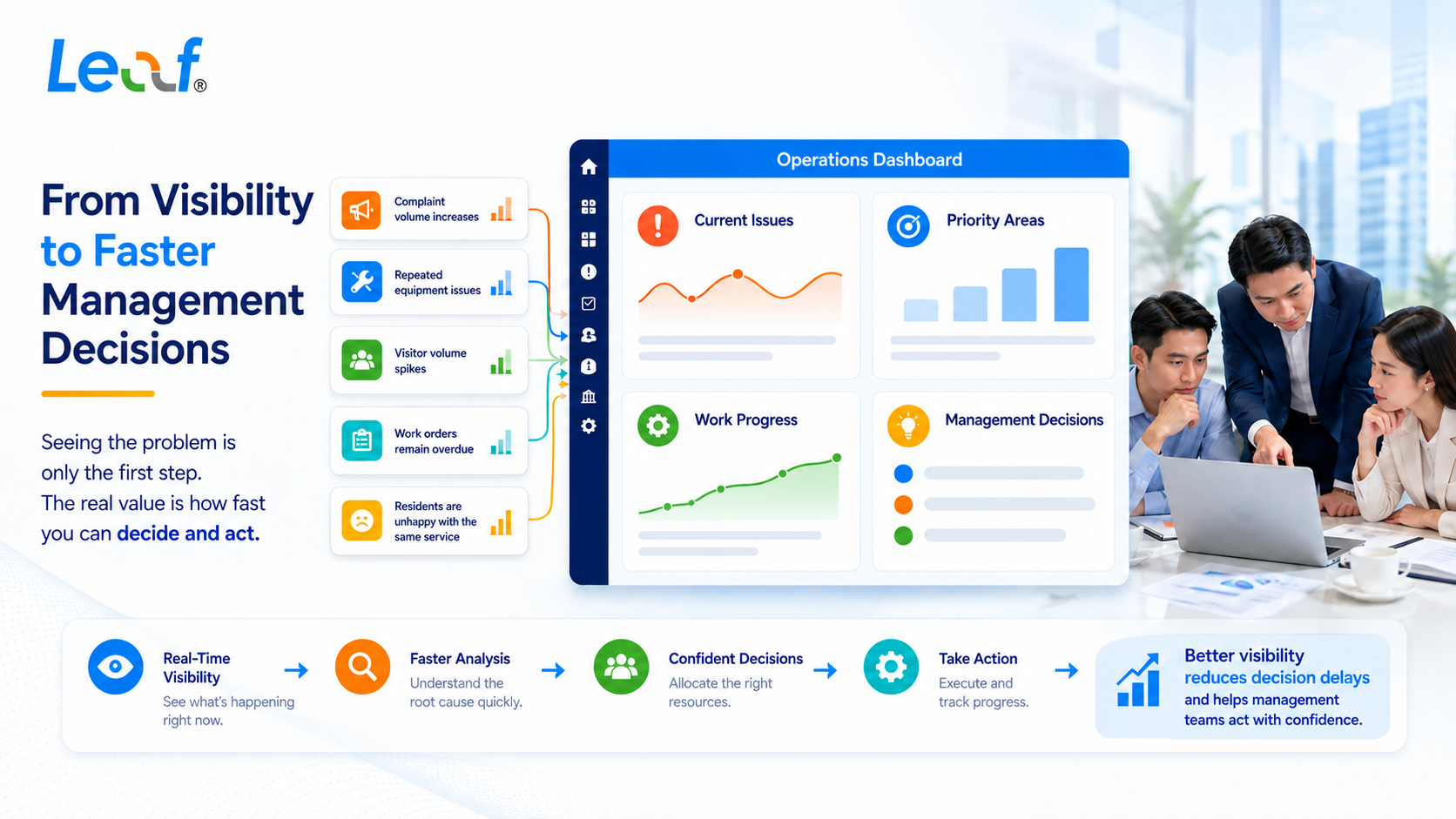
Property Operations Dashboard: From Visibility to Faster Management Decisions