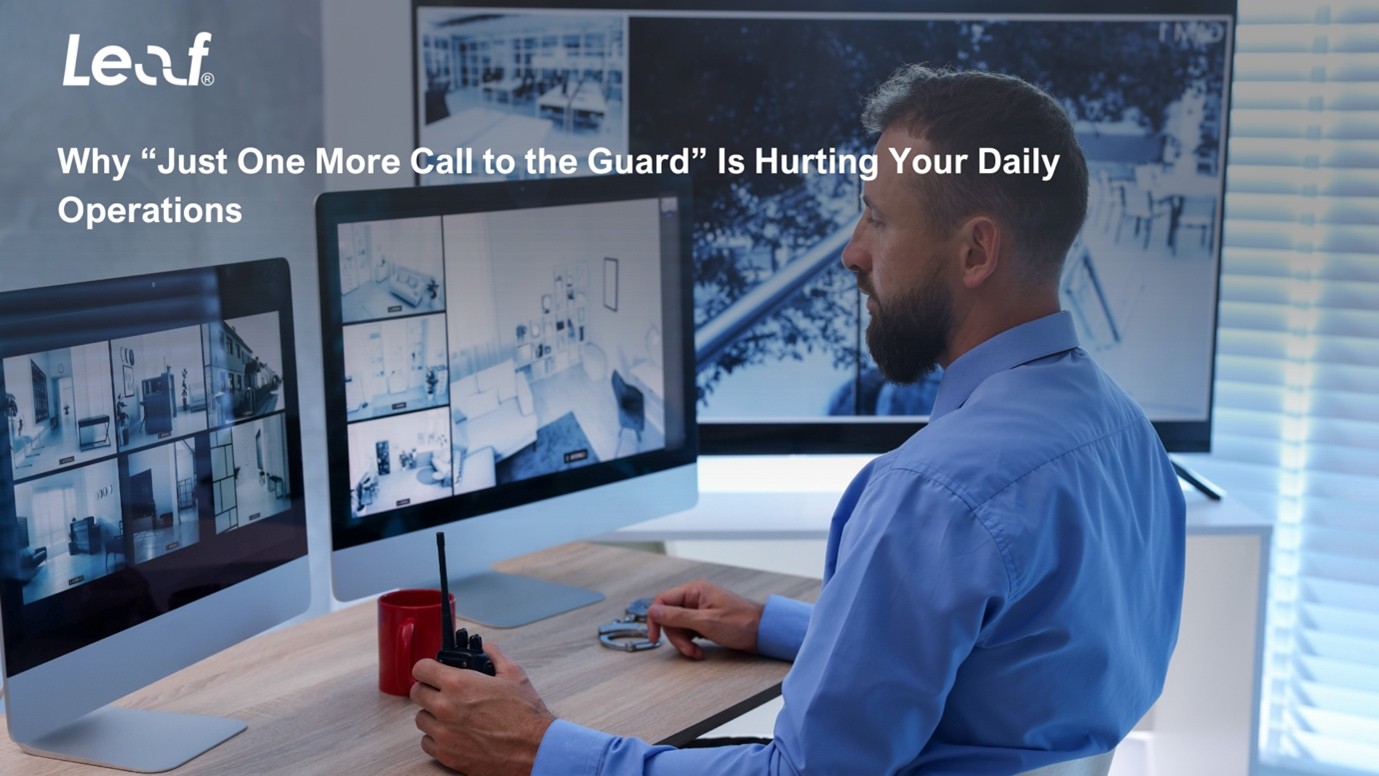
Guardhouse Communication Delays: The Hidden Cost
Guardhouse communication delays often begin with small requests that seem simple at first.
“Can you call the guard to let my delivery in?”
“Please inform the guard that my guest is arriving.”
“I’ll call the guard later to approve the contractor.”
Each request sounds harmless. It may only take a few minutes.
But in busy residential, commercial and mixed-use buildings, these “just one more call” moments can happen many times throughout the day. Over time, repeated calls to the guardhouse can slow approvals, interrupt residents, increase pressure on guards and create unnecessary delays in daily building operations.
The problem is not communication itself.
The problem is relying too heavily on manual calls to manage visitor entry and daily access approval.
The Hidden Cost of Constant Guardhouse Calls
Every time a call is made to the guardhouse, it creates a chain of manual actions.
The guard may need to pause what they are doing, answer the call, verify the request, check visitor details, confirm the unit or tenant, write down information and then approve entry.
This may happen for:
Deliveries
Residents’ guests
Contractors
Service providers
Ride-hailing drivers
Short-term visitors
Facility-related appointments
Each call may feel small, but the total operational impact can become significant.
When guardhouse communication delays happen repeatedly, they create longer waiting times, more interruptions, higher guard workload and less predictable entrance flow.
To understand how manual records also affect entrance operations, read our article on Manual Visitor Log.
Interruptions Slow Down the Whole Building
In modern building operations, efficiency depends on smooth flow.
Phone-based visitor approvals break that flow.
A guard may be checking a visitor at the entrance when another resident calls. A delivery rider may be waiting while the guard searches for approval. A contractor may arrive during peak hours while the guard is already handling vehicles, logbooks and visitor questions.
At the same time, residents and tenants may be interrupted during work, meetings or personal time just to approve routine entries.
This creates a stop-and-go operating pattern.
Instead of a structured workflow, the building depends on repeated calls, manual confirmation and scattered communication.
The more active the property becomes, the harder this process is to manage.
Why Manual Guardhouse Communication No Longer Works
Manual approval processes were easier to manage when visitor volume was low.
But modern buildings now deal with more frequent daily movement.
There are more deliveries, more on-demand services, more contractors, more guests and more visitor activity throughout the day.
When every approval depends on a phone call or manual guardhouse communication, the process becomes difficult to scale.
Common issues include:
Visitors waiting longer than necessary
Guards handling too many interruptions
Residents receiving repeated calls
Approval details being missed or forgotten
Entry records becoming incomplete
Management lacking visibility over access activity
The issue is not that guards are not working hard enough.
The issue is that the workflow depends too much on manual coordination.
Better Visibility Reduces Guardhouse Pressure
A more structured visitor workflow helps reduce unnecessary calls and makes the process easier to manage.
Instead of asking guards to manually coordinate every approval, buildings can use digital visitor registration, clearer resident notifications and better access records.
This gives the team better visibility into:
Who is visiting
Who approved the entry
When the visitor arrived
What purpose the visit is for
Whether the entry has been recorded
Whether follow-up is needed
When information is easier to see, the team spends less time checking, calling and confirming.
To see how better visibility improves daily operations, read our article on Property Operations Visibility.
A Better Way: Reduce the Need for Repeated Calls
The goal is not to make guards answer calls faster.
The better goal is to reduce unnecessary calls in the first place.
With a better visitor workflow, residents can receive clearer notifications, visitors can register more efficiently, and guardhouse teams can manage exceptions instead of handling every basic approval manually.
This helps turn visitor entry from a reactive process into a more structured flow.
Instead of relying on repeated phone calls, buildings can move toward digital registration, faster approvals and clearer records.
How LEAF Helps Improve Guardhouse Communication
LEAF Smart Community helps buildings reduce guardhouse communication delays through smarter visitor workflows and Mini Kiosk solutions.
With LEAF Mini Kiosk, visitors can register digitally, visitor information can be captured more clearly, and approval workflows can become more structured.
This helps reduce repeated manual coordination between residents, tenants and guards.
With digital visitor records and better operational visibility, management teams can also review visitor activity more easily and reduce dependency on paper records or scattered calls.
The result is a smoother entrance experience for visitors, fewer interruptions for residents and less pressure on guardhouse teams.
From Constant Interruptions to Smoother Flow
“Just one more call to the guard” may seem insignificant.
But across an entire building, repeated calls can add up to hours of lost time, unnecessary interruptions and slower daily operations.
The solution is not simply to manage calls better.
The better solution is to build a visitor workflow that reduces the need for repeated calls.
With LEAF Smart Community’s Mini Kiosk and digital visitor management tools, property teams can create a faster, more structured and more efficient entry process.
Contact LEAF today to discover how smarter visitor workflows can reduce guardhouse communication delays in your building.
Related posts
Property Operations Dashboard: From Visibility to Faster Management Decisions