Property operations delays often begin with small issues, such as slow approvals, repeated follow-ups, and unclear task ownership. Over time, these five-minute delays can add up to several hours every week.
In most buildings, delays do not always come from major incidents.
They often come from small moments that happen repeatedly throughout the day.
A visitor waits at the guardhouse.
A delivery rider gets stuck in a queue.
A guard makes a call for approval.
A resident pauses work to confirm visitor entry.
A management staff member checks another chat for the latest update.
Each delay may feel minor. Manageable. Even normal.
But when the same delay happens dozens or hundreds of times across a busy property, it quietly becomes a serious operational problem.
Where Property Operations Delays Happen
In busy residential, commercial and mixed-use buildings, small delays appear in many daily workflows.
They often happen during:
Visitor check-ins using manual logbooks
Phone calls for entry approval
Delivery rider and contractor verification
Resident complaint follow-up
Maintenance request assignment
Approval waiting time
Guards juggling paperwork and entrance control
Management teams checking different records for updates
Each interaction may only take three to five minutes.
But when these delays happen repeatedly, the total time loss becomes significant.
For example, if a building handles 100 visitor entries per day and each entry creates just five minutes of delay, that equals 500 minutes lost in one day.
That is more than eight hours of time lost daily.
This does not include the additional impact of frustrated visitors, interrupted residents, overloaded guards and management teams spending extra time checking information.
Small Delays Create Bigger Operational Pressure
The real cost of property operations delays is not only time.
Delays affect the full building experience.
Guards may become overwhelmed with repetitive admin work instead of focusing on security. Residents may receive repeated approval calls or follow-up messages. Visitors may experience slow and disorganised entry. Management teams may struggle to see where bottlenecks are happening.
Over time, these small delays reduce operational efficiency and increase pressure across the entire team.
For a broader perspective on operational efficiency, McKinsey shares useful operations insights here: operational efficiency.
Why Manual Systems Cannot Keep Up
The root cause is usually not the people.
It is the process.
Manual systems depend on repeated steps such as writing, calling, verifying, checking, recording and following up manually.
These steps take time no matter how hardworking the team is.
As building traffic increases, manual workflows become harder to manage. A guardhouse that works well with low visitor volume may become slow during peak hours. A spreadsheet that works for a few complaints may become difficult to track when dozens of issues are active. A WhatsApp chat that works for simple updates may become messy when many people are involved.
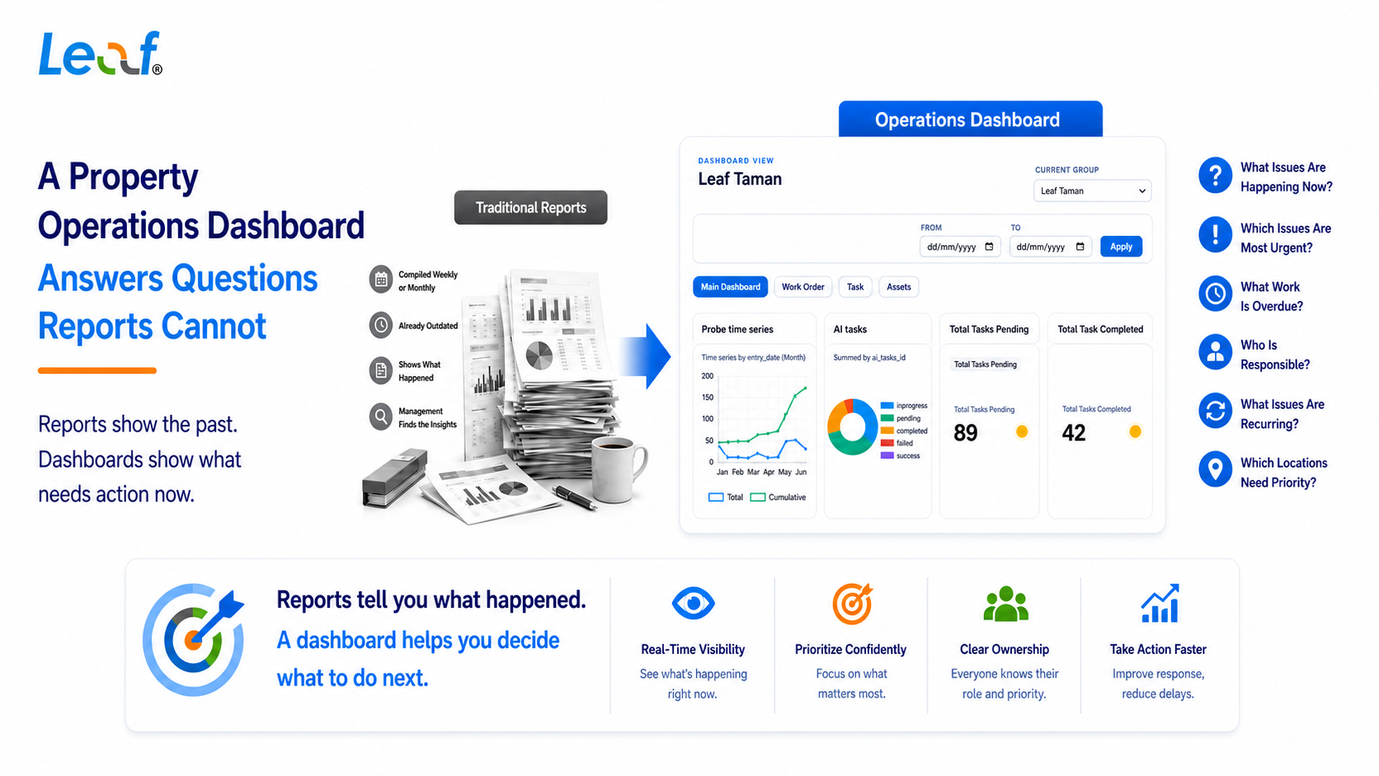
Without better visibility, teams may not know which task is pending, who is responsible, what action is next or where the delay is happening.
To understand how visibility affects daily issue handling, read our article on Property Operations Visibility.
How Better Visibility Reduces Wasted Time
Reducing delays is not only about working faster.
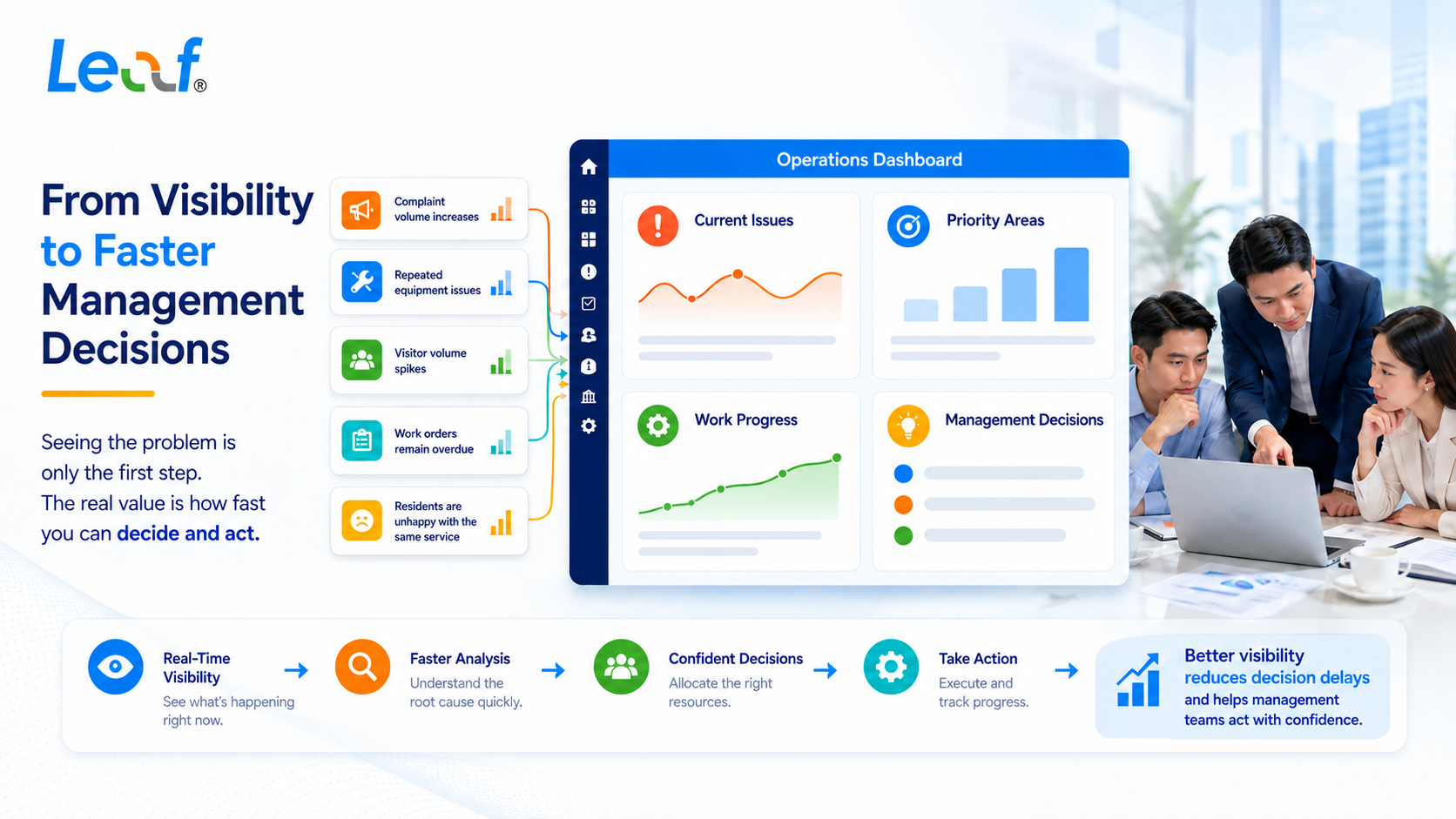
It is about making information easier to see and act on.
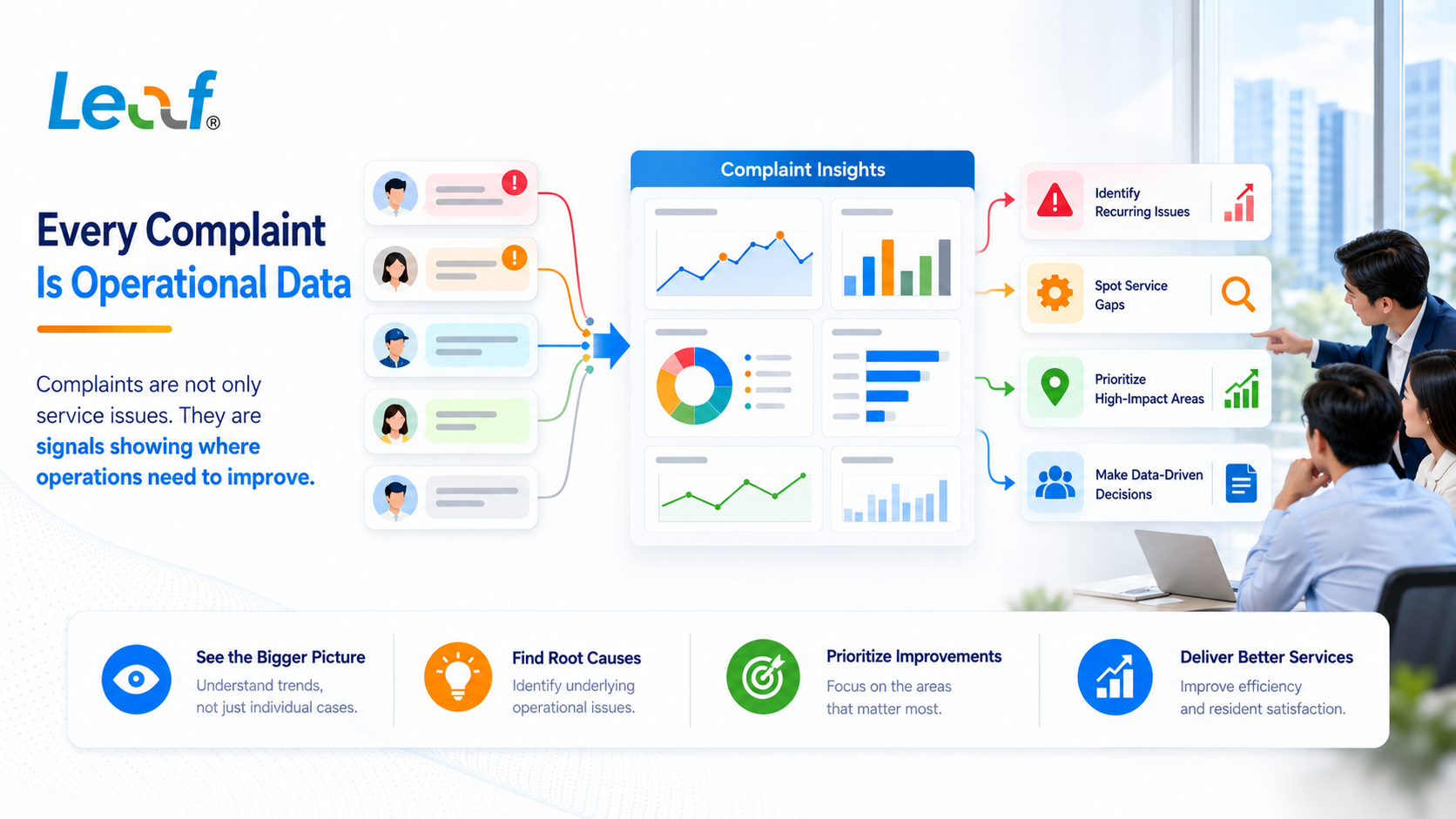
When property teams can clearly see task owners, status, timelines and pending actions, they spend less time asking for updates and more time moving work forward.
Better visibility helps teams:
Assign tasks faster
Reduce repeated checking
Track visitor and maintenance records more clearly
Identify pending approvals earlier
Reduce unnecessary resident interruptions
Improve coordination between guards, management and vendors
Spot bottlenecks before they become bigger issues
This is how small operational improvements can create meaningful time savings.
How LEAF Smart Community Helps Reduce Daily Delays
LEAF Smart Community helps property teams reduce daily bottlenecks by improving visitor workflows, task tracking, digital records and operational visibility.
With LEAF Mini Kiosk, visitor registration can become faster and more structured. Visitors can check in digitally, approval workflows can be clearer, and entries can be recorded without depending only on manual logbooks.
With LEAF’s digital workflows, management teams can also track operational updates more clearly, from complaints and maintenance requests to resident updates and follow-up actions.
The goal is not only to save a few minutes at the entrance.
The goal is to reduce repeated manual coordination across daily property operations.
If you want to explore smarter property workflows, visit our AI Solutions page.
From Time Loss to Time Saved
When daily five-minute delays are reduced, the impact can be significant.
Queues become shorter. Guards can focus more on security. Residents receive fewer unnecessary interruptions. Management teams gain better visibility. The entire property runs more smoothly.
Big improvements do not always come from big changes.
Sometimes, they come from fixing the small inefficiencies that happen every day.
With better visibility, clearer workflows and smarter digital tools, property teams can reduce wasted time and create a faster, more organised operating environment.
Contact LEAF today to discover how smarter workflows can help reduce property operations delays in your building.


Pingback: Self Check-In Kiosk: 3 Ways to Improve Lobby Flow